Travel has changed a lot in the last few years. Instead of buying a local SIM card at the airport, many travelers now install an eSIM on their phone before they even leave home. It is fast, cheap and easy. But a common question follows: if I already have an eSIM, do I still need a VPN?
The short answer is yes, in many cases. An eSIM and a VPN solve two different problems. An eSIM gives you a mobile connection. A VPN protects what travels over that connection. At TecClub, we build VPN apps used by travelers in many countries, so in this guide we explain in simple words what each one does, where they overlap, and when you should use both.
What Is an eSIM?
An eSIM (embedded SIM) is a digital SIM built into your phone. Instead of inserting a plastic card, you scan a QR code or install a profile from an app, and your phone connects to a mobile network. Most modern smartphones support eSIM, and many can hold several eSIM profiles at once.
For travelers, eSIMs are popular because:
- You can buy a data plan online before your trip.
- You do not need to find a shop or swap physical cards.
- You can keep your home number active for calls and messages while using a travel data plan.
- Prices are often much lower than international roaming.
What Is a VPN?
A VPN (Virtual Private Network) creates an encrypted tunnel between your device and a VPN server. All your internet traffic goes through this tunnel, so networks along the way cannot easily read it. Websites see the IP address of the VPN server instead of your real one.
A VPN does not give you an internet connection. It works on top of any connection you already have: Wi-Fi, mobile data, or an eSIM.
eSIM vs VPN: The Key Difference
| Question | eSIM | VPN |
|---|---|---|
| What does it do? | Connects your phone to a mobile network | Encrypts and routes your internet traffic |
| Gives you internet access? | Yes | No, it needs an existing connection |
| Encrypts your browsing? | No, only the radio link to the tower | Yes, from your device to the VPN server |
| Protects you on public Wi-Fi? | Only if you avoid Wi-Fi and use data | Yes, on any network |
| Changes your visible location? | Sometimes, depending on the provider | Yes, you choose the server location |
| Main benefit for travelers | Cheap, easy mobile data | Privacy, security and stable access |
In simple words: the eSIM is the road, and the VPN is the armored car that drives on it.
Is an eSIM Secure on Its Own?
Mobile data is generally safer than open public Wi-Fi, and eSIMs also have one extra benefit: they cannot be removed and stolen like a physical SIM card. But an eSIM still has limits:
- Your traffic is visible to the network operator. The mobile operator, and sometimes partner networks, can see which domains you visit and how much data you use.
- Travel eSIM providers are often resellers. Your data may pass through several companies and countries before it reaches the internet.
- You will still use Wi-Fi. Hotels, airports and cafes offer free Wi-Fi, and most travelers connect to it to save data. The eSIM does nothing to protect you there.
Why Your IP Location Can Look Strange with a Travel eSIM
Many travelers notice something surprising: they are in one country, but websites think they are in another. This happens because many travel eSIM providers route traffic through a central hub, which may be in a different country from the one you are visiting.
This can cause small problems, such as a search engine showing results in the wrong language, a banking app asking for extra verification, or a streaming service showing a different library. A VPN gives you control here. You choose the server location, so your online location stays consistent with what you need, for example your home country for banking and work tools.
When You Should Use Both
1. Using hotel, airport or cafe Wi-Fi
Public Wi-Fi is the biggest risk for travelers. Fake hotspots, weak passwords and shared networks make it easy for others to watch traffic. Turn on your VPN every time you join a network you do not control. Read more in our post on what a VPN does on public Wi-Fi.
2. Online banking and payments abroad
Banks watch for unusual logins. Connecting through a VPN server in your home country can reduce extra security checks and keeps your login traffic encrypted on any network.
3. Working remotely while traveling
Company tools, email and cloud dashboards often expect logins from certain regions. A VPN keeps your connection secure and your location consistent, which is important when you handle client or company data.
4. Visiting countries with internet restrictions
Some countries block popular apps, websites or messaging services. Always respect local laws, but in places where VPN use is allowed, a VPN with modern protocols such as VLESS, Hysteria2 or WireGuard helps keep your usual apps working. You can read about this in our guide to traffic obfuscation in modern VPN systems.
Does a VPN Use More eSIM Data?
Yes, but only a little. Encryption adds a small overhead, usually a few percent of your total data. Modern protocols like WireGuard are very efficient, so for most travelers the difference is hard to notice. If your plan is very small, choose a lightweight protocol and turn off background app refresh for apps you do not need.
Tips for Using eSIM and VPN Together
- Install both before you travel. Set up your eSIM and VPN app at home, while you have a fast and trusted connection.
- Turn on auto-connect. Let the VPN connect automatically on untrusted Wi-Fi networks.
- Enable the kill switch. If the VPN drops, the kill switch stops traffic from leaking outside the tunnel.
- Pick a nearby server for speed. Use your home country server only when you need your home location.
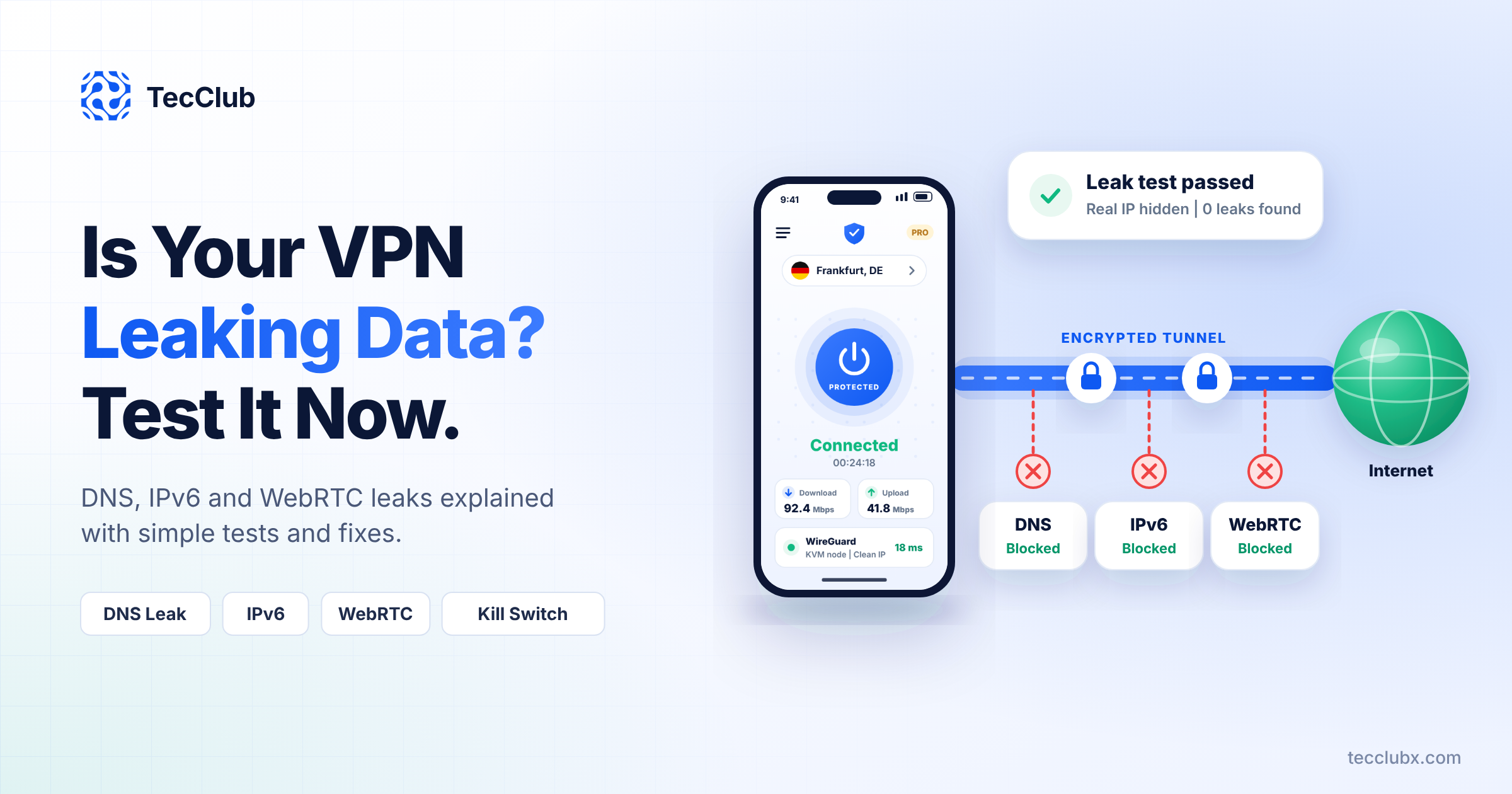
- Check for leaks. A quick DNS and IPv6 leak test confirms your VPN is protecting everything. See our guide on VPN leak testing.
- Use a trusted VPN. Free VPNs with unknown owners may collect and sell your data, which defeats the purpose.
A Business Opportunity: eSIM and VPN in One App
Because travelers need both mobile data and privacy, more brands now offer eSIM data plans and VPN protection in a single app or bundle. For VPN businesses, this is a natural way to add value and increase revenue per user. For travel and telecom brands, adding a VPN makes their product more complete.
Building such an app needs a clean user experience, secure payments, a reliable VPN backend and an admin panel to manage users, plans and servers. If you are planning a product like this, our guide on building a subscription-based VPN business is a good place to start.
Frequently Asked Questions
Can a VPN replace an eSIM?
No. A VPN needs an internet connection to work. It cannot connect you to a mobile network. You still need an eSIM, a physical SIM, roaming or Wi-Fi.
Does an eSIM hide my IP address?
Not in a way you control. Your IP comes from the mobile network or the eSIM provider. It may show a different country, but it is not private and you cannot choose it. A VPN lets you choose.
Will a VPN slow down my eSIM connection?
A good VPN with a nearby server has a very small effect on speed. Sometimes it can even make the connection more stable, depending on the network.
Is it legal to use a VPN while traveling?
In most countries, yes. A few countries limit or ban VPN use, so always check local rules before you travel.
Planning an eSIM or VPN App?
TecClub builds VPN apps for Android, iOS, Windows and macOS, with modern protocols, kill switch and a full admin panel. We can also help you bundle VPN protection with eSIM data plans.