Using a VPN today isn’t always as straightforward as it used to be.
A lot of networks have gotten smarter. They can actually tell when someone is using a VPN—and sometimes they block it.
That’s where traffic obfuscation comes in.
At TecClub Technology, we use it to make VPN traffic blend in so well that it just looks like normal internet activity. No flags, no suspicion—just smooth, private browsing.
What Does “Traffic Obfuscation” Actually Mean?
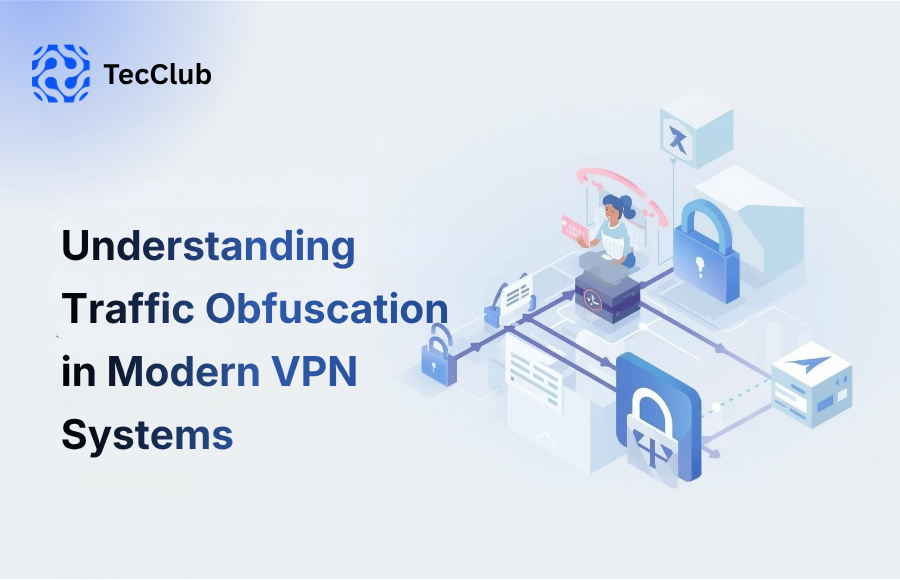
Put simply, it’s about hiding the fact that you’re using a VPN.
Instead of your data looking like “VPN traffic,” it looks like:
- regular website browsing
- normal app usage
- everyday internet activity
So if someone is monitoring the network, nothing stands out.
Why VPNs Get Blocked in the First Place
These days, networks don’t just block websites—they analyze traffic.
They look for things like:
- known VPN patterns
- unusual data behavior
- recognizable protocol signatures
So even if your data is encrypted, it can still look like a VPN.
And once it’s recognized, it can be slowed down—or blocked completely.
How Obfuscation Fixes This
Obfuscation basically “blends” your traffic in.
It:
- hides identifiable patterns
- mixes up how data is sent
- makes everything look like normal HTTPS traffic
So instead of sticking out, your connection just looks… ordinary.
And that’s exactly what you want.
How VPNs Actually Hide the Traffic
There are a few clever tricks happening behind the scenes:
Making It Look Like Normal Browsing
Most internet traffic uses HTTPS. So VPN data is made to look the same—making it hard to block without affecting regular users.
Breaking Predictable Patterns
Instead of sending data in a fixed way, the system randomizes things so it doesn’t look “machine-like.”
Wrapping It in Secure Layers
Traffic is packaged in a way that looks like standard secure connections.
Hiding Where It’s Really Going
Sometimes the destination itself is masked, so it doesn’t reveal anything unusual.
Tools That Make This Possible
Some modern technologies are built specifically for this:
- Shadowsocks – simple, fast, and harder to detect
- V2Ray – more advanced, with flexible routing and obfuscation
They’re especially useful in places where internet access is restricted.
The Role of Modern VPN Systems
Tools like Sing-box bring everything together.
They let developers:
- control how traffic behaves
- apply smart routing rules
- combine different protocols and obfuscation methods
This makes the whole system much more flexible and effective.
Why This Matters So Much
Without obfuscation, a VPN might not even work in some environments.
With it, users can:
- access blocked content
- avoid being detected
- stay private
- connect more reliably
It’s what keeps VPNs useful in today’s internet.
The Trade-Off (Nothing Is Perfect)
There’s a small cost to all this.
Obfuscation can:
- add a bit of delay
- use slightly more resources
- require smarter configuration
But when done right, most users won’t even notice the difference.
Where It Really Makes a Difference
This is especially important for people who:
- live in restricted regions
- use tightly controlled networks (like offices or schools)
- rely on public Wi-Fi
- care deeply about privacy
In these cases, obfuscation isn’t optional—it’s essential.
How We Handle It at TecClub Technology
At TecClub Technology, we design VPN systems to adapt to real-world conditions.
We:
- combine modern protocols with obfuscation
- use smart routing to avoid detection
- keep performance smooth while maintaining privacy
So users can connect without worrying about blocks or interruptions.
Final Thoughts
The internet is changing—and not always in ways that support open access.
Traffic obfuscation helps VPNs keep up. It hides what needs to be hidden and keeps connections working where they normally wouldn’t.
At TecClub Technology, we focus on making this invisible layer work perfectly—
so users can browse freely without even thinking about it.