How VPN Businesses Make Recurring Revenue
1. What Makes the VPN Business Model Recurring?
The core reason how VPN businesses generate recurring revenue is so reliable comes down to subscriptions. Instead of selling a product once, VPN companies usually sell access over time through a VPN subscription model. That means revenue can continue month after month or year after year as long as customers keep their plans active.
This is similar to many subscription-based software businesses, but VPN services have a specific advantage: they solve an ongoing need. People and businesses want continuous privacy, security, and access protection, so the service does not end after a single purchase. That makes the model naturally suited to VPN recurring revenue.
Why subscriptions are the core revenue engine
Subscriptions are the foundation because they turn a one-time purchase into a repeatable billing relationship. A customer signs up, chooses a plan, and pays on a set schedule. This creates a predictable base of income that supports product development, support, infrastructure, and marketing.
For a VPN company, the subscription model also helps match revenue with service delivery. The business is continually providing access, security features, and support, so ongoing payments make commercial sense.
How auto-renewals create predictable cash flow
Auto-renewing subscriptions are especially important because they reduce friction at the point of renewal. When a customer stays active without needing to manually repurchase, the company keeps revenue flowing more smoothly. This helps create predictable cash flow and improves planning.
Auto-renewals also matter for retention. Even if a customer is not actively shopping for a replacement, the renewal keeps the relationship alive. That is one reason subscription renewals are a major part of VPN revenue streams.
Why customer retention matters more than one-time sales
In a recurring model, the first sale is only the beginning. The real value comes from keeping customers for as long as possible. That is why VPN retention strategies are so important. A company that reduces churn can often outperform one that only focuses on acquiring new users.
Customer retention improves customer lifetime value, which is one of the most important metrics in a subscription business. The longer a subscriber stays, the more valuable that account becomes.
2. The Main Ways VPN Companies Generate Revenue
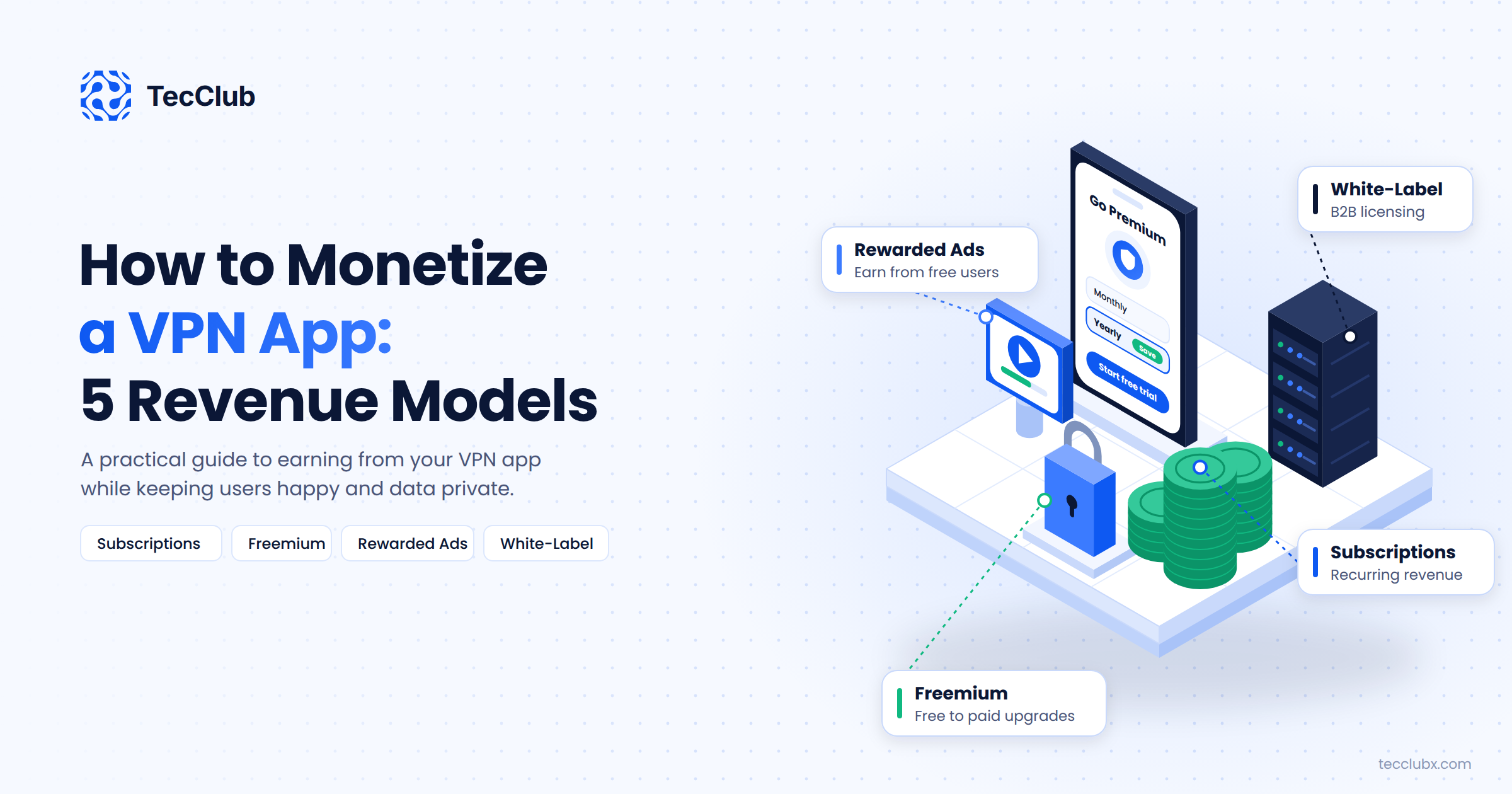
VPN providers do not rely on a single income source. Instead, they typically combine several revenue streams to stabilize earnings and grow their user base. These models may overlap, but together they explain how VPN businesses build a predictable and scalable business.
Monthly and annual subscription plans
The most direct revenue source is the paid consumer plan. VPN monthly subscriptions give customers flexibility and lower commitment, while VPN annual plans usually provide a better value proposition for long-term users. Both contribute to recurring billing, but they serve different customer needs.
Monthly plans can be useful for people who want to test a service or need short-term coverage. Annual plans, by contrast, bring in more upfront cash and usually indicate a stronger commitment from the customer.
Business VPN and team plans
Another important source is business VPN plans. These offerings are designed for organizations that need secure access for employees, teams, or distributed workforces. Because businesses often need multiple seats, centralized management, and support, B2B VPN services can generate higher-value contracts than standard consumer accounts.
Business VPN pricing is often structured to reflect this added value. Companies may pay more for admin controls, team access, or account management features, which can improve revenue per customer.
Affiliate and partner commissions
VPN affiliate programs are a major acquisition channel. In this model, publishers, content creators, and marketers refer customers to a VPN provider and earn a commission when a sale occurs. This is a form of affiliate marketing for VPNs that helps providers reach new audiences without relying only on direct advertising.
For the provider, affiliate commissions can be a performance-based cost of acquisition. For the partner, it creates a way to earn from traffic and content already being produced. This makes the model attractive on both sides.
Reseller and influencer programs
Some companies also use VPN reseller programs and influencer partnerships to expand distribution. These arrangements can look different depending on the business, but the principle is similar: third parties help sell the service, and the VPN company shares revenue or commissions in return.
These partner-driven channels can widen reach quickly, especially in crowded markets where trust and recommendation matter. They also fit well with the broader VPN revenue streams strategy because they diversify how customers are acquired.
3. Why Annual Plans Are So Important
Annual plans are one of the most important parts of the VPN business model. They may not always be the cheapest option for the customer upfront, but they often create stronger business outcomes for the provider. That is why many VPN companies emphasize annual billing in their pricing strategy.
Higher upfront revenue
The first benefit is simple: annual plans generate more money at the start of the relationship. Instead of collecting one month of revenue, the provider receives a larger payment immediately. This supports operational costs and improves short-term cash flow.
That upfront revenue can be particularly useful for customer acquisition, infrastructure, and ongoing support. It gives the company more flexibility than depending only on monthly subscriptions.
Lower churn risk
Annual billing can also lower churn risk. A customer who has already paid for a year is less likely to leave immediately, especially if the service continues to meet expectations. Even though the subscription will eventually renew, the longer billing cycle creates more stability for the company.
This is one reason annual plans are so closely tied to subscription renewals and retention. A longer commitment usually means more time for the provider to deliver value and build trust.
Better customer lifetime value
Annual plans often improve customer lifetime value because they increase the amount earned from each subscriber over time. If the business can keep the customer through renewal cycles, the account becomes more profitable and more predictable.
From a business perspective, this is one of the clearest explanations for why VPN annual plans matter. They combine stronger upfront revenue with better retention economics.
4. How VPN Businesses Use Pricing Tiers to Increase Revenue
VPN companies often use pricing tiers to serve different customer segments and increase total revenue. By offering multiple levels of service, they can appeal to price-sensitive users while also monetizing customers who want advanced features or business functionality.
Free vs premium plans
Some VPN businesses use a free entry point to attract users, then encourage upgrades to premium service. While the research here focuses on recurring revenue, the role of tiering is still important: a free plan can act as a customer acquisition tool, while premium plans convert the most engaged users into paying subscribers.
That transition from free to paid is a common way to build a larger subscription base. Once users experience the value of the service, they may be more willing to commit to a recurring plan.
Feature-based upsells
Feature-based upsells are another way to grow revenue. A provider may reserve certain benefits for higher-priced plans, encouraging customers to upgrade if they need more value. This structure helps increase average revenue per user while keeping the entry price accessible.
In practice, this can support both monthly and annual subscriptions, depending on which features are included in each tier.
Bundled security products
Some VPN providers also bundle security-related products or services to broaden the offer. Bundling can make the subscription more valuable to the customer and help the provider deepen the relationship beyond a single core service.
This approach fits especially well in the broader cybersecurity market, where customers often want a set of privacy and security tools rather than only one product.
Dedicated IP and business add-ons
Dedicated IP options and other business add-ons can increase revenue per account. These add-ons are especially relevant for users who need more control, consistency, or administrative flexibility. For businesses, such extras can be part of the wider VPN business pricing strategy.
By layering add-ons on top of standard plans, providers can grow revenue without needing to acquire a completely new customer every time.
| Pricing approach | Main benefit | Revenue effect |
|---|---|---|
| Monthly subscriptions | Flexibility for customers | Steady recurring income |
| Annual plans | Lower commitment risk over time | Higher upfront revenue and stronger retention |
| Business VPN plans | Team features and support | Higher-value contracts |
| Add-ons | Extra functionality | Higher revenue per customer |
5. What Role Do Affiliates and Resellers Play?
Affiliate and reseller channels are essential to many VPN growth strategies. They help companies acquire customers efficiently and expand beyond direct advertising. In competitive markets, these partnerships can be a major driver of scale.
Commission-based customer acquisition
With commission-based acquisition, a VPN company pays a partner only when a sale happens. This makes the channel performance-driven and easier to connect to revenue outcomes. It is one reason VPN affiliate programs remain popular.
For affiliates, the appeal is clear: they can monetize audiences through content, reviews, comparisons, and recommendations. For providers, the benefit is access to traffic and trust built by third parties.
Recurring commissions on renewals
Some partnerships may also include recurring commissions on renewals, which aligns partner incentives with long-term customer value. When an affiliate continues to benefit from a retained customer, the partner has even more reason to promote quality recommendations and sustainable acquisition.
This is closely connected to recurring revenue because it ties acquisition costs to the same subscription lifecycle that drives the business.
Why partner marketing scales efficiently
Partner marketing can scale efficiently because it extends the sales force without requiring the provider to build every customer relationship directly. Affiliate marketing for VPNs works well when the product is easy to compare and the buying decision is influenced by trust, reviews, and performance claims.
Reseller and influencer programs add another layer of reach. Together, these channels help the business grow while keeping acquisition more flexible than some traditional paid media models.
6. How VPN Businesses Reduce Churn and Increase LTV
Recurring revenue depends not just on getting customers, but on keeping them. That is why VPN businesses invest in retention strategies that reduce churn and increase lifetime value. When customers stay subscribed longer, the economics of the business improve.
Product quality and trust
Trust is central in the VPN market. Customers are asking the service to handle sensitive online activity, so product quality matters greatly. If the service works well and is perceived as reliable, users are more likely to remain subscribed.
This makes product performance and trust foundational to retention. Without them, even strong pricing or partner acquisition cannot compensate for lost customers.
Refund policies and onboarding
Clear refund policies and smooth onboarding can also support retention. If customers understand what they are buying and can start using the service without friction, they are more likely to stay active beyond the first billing cycle.
Good onboarding helps users realize value quickly. That early success can reduce cancellations and improve the chances of renewal.
Cross-selling additional privacy tools
Some providers try to strengthen retention through cross-selling additional privacy tools. This can deepen the customer relationship and increase the utility of the subscription. When more of a user’s security needs are covered inside one provider’s ecosystem, switching becomes less attractive.
This strategy supports both VPN retention strategies and long-term revenue growth by increasing the total value of each customer account.
7. Key Takeaways for Understanding VPN Revenue
Understanding how VPN businesses generate recurring revenue starts with recognizing that the model is built on long-term subscriptions, not one-time sales. From consumer billing to business VPN plans, the entire structure is designed to create predictable income and lasting customer relationships.
Subscription revenue is the foundation
The VPN subscription model is the foundation of the industry. Monthly subscriptions, annual plans, and auto-renewing subscriptions all help create dependable cash flow. The more customers continue paying, the stronger the revenue base becomes.
Partnerships and business plans expand growth
Beyond consumer plans, B2B VPN services, business VPN offerings, affiliate commissions, and reseller programs all expand the opportunity for growth. These channels help companies reach new markets and diversify their VPN revenue streams.
Retention drives long-term profitability
Ultimately, the most profitable VPN businesses are usually the ones that keep customers subscribed. Strong product quality, effective onboarding, clear pricing, and useful add-ons all help improve retention and increase customer lifetime value. In a subscription business, long-term profitability comes from consistent renewals, not just from the first sale.
For entrepreneurs, SaaS founders, and cybersecurity marketers, the lesson is straightforward: recurring revenue in the VPN industry is not built on a single tactic. It comes from combining subscriptions, annual plans, partnerships, and retention-focused operations into one durable business model.
Conclusion
VPN companies generate recurring revenue by building subscription relationships that can renew over time. Monthly and annual billing, business VPN plans, affiliate programs, and reseller partnerships all contribute to a model that is predictable, scalable, and designed for long-term growth.
If you are studying subscription businesses or evaluating the VPN market, the key idea is simple: the strongest VPN companies do not depend on one-time sales. They focus on retention, customer lifetime value, and repeated billing cycles that support steady revenue over time.