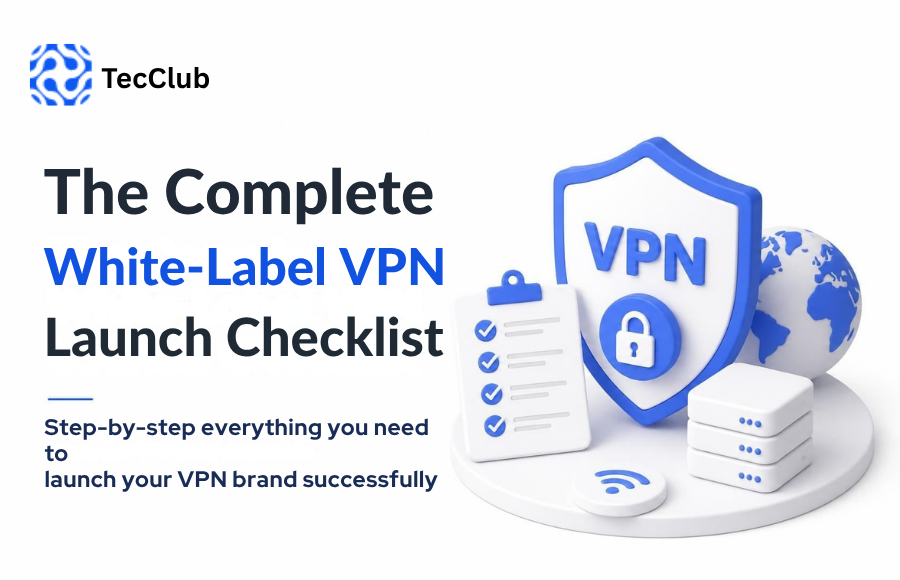
The Complete White-Label VPN Launch Checklist
Launching a VPN business sounds like a huge undertaking, and a few years ago, it really was. You needed to build servers, develop apps, create a backend, and hire a team just to get your product off the ground.
Today, things are very different.
With white-label VPN solutions, you can launch your own branded VPN service without building the entire infrastructure yourself. But here's something many first-time founders discover the hard way: having a VPN platform is only one piece of the puzzle.
A successful launch isn't just about putting an app on the App Store or Google Play. It's about making sure every part of your business—from your branding and pricing to customer support and security—is ready before your first customer signs up.
At TecClub Technology, we've helped businesses launch VPN brands for startups, agencies, and enterprise clients. Along the way, we've seen what works, what people often forget, and what can make the difference between a smooth launch and months of unnecessary setbacks.
If you're planning to start your own VPN business, this checklist will help you cover the essentials before you go live.
Why a Launch Checklist Matters
When people think about starting a VPN business, they usually picture the app.
In reality, the app is only what customers see.
Behind it, there's an entire system working together—servers, backend services, subscriptions, payment processing, customer support, monitoring, branding, and security. Missing just one of these pieces can create problems after launch.
Having a clear checklist helps you stay organized, avoid common mistakes, and launch with confidence instead of rushing to fix issues later.
✅ 1. Decide What Kind of VPN Business You're Building
Before choosing technology or designing your logo, take a step back and think about who you're building the service for.
Ask yourself:
- Are you targeting everyday users who want privacy while browsing?
- Do you want to provide VPN services for businesses and remote teams?
- Are you planning to become a VPN reseller?
- Will your focus be local customers or an international audience?
The clearer your audience is, the easier every other decision becomes—from pricing to marketing and even feature selection.
✅ 2. Choose a White-Label VPN Provider You Can Trust
Your provider is more than just a vendor—they're the foundation of your entire business.
A reliable partner should offer:
- Stable infrastructure
- High server uptime
- Multiple VPN protocols
- Global server locations
- Transparent pricing
- Ongoing technical support
- Scalable architecture
It can be tempting to choose the cheapest option, but reliability matters far more than saving a little money upfront.
After all, your customers aren't judging your provider—they're judging your brand.
✅ 3. Build a Brand People Will Remember
The VPN market is crowded.
A recognizable and professional brand helps people remember you and, more importantly, trust you.
Before launch, make sure you've prepared:
- A business name
- A clean logo
- Brand colors
- App icon
- Website
- Custom domain
- Privacy Policy
- Terms of Service
Good branding isn't just about looking professional—it reassures customers that they're using a legitimate service.
✅ 4. Customize Your Applications
Your apps should feel like your product, not someone else's platform with a different logo.
Whether you're launching on Android, iOS, Windows, or macOS, make sure everything reflects your brand consistently.
That includes:
- App name
- Splash screen
- Icons
- Color scheme
- Interface elements
- Overall user experience
A polished app immediately creates a stronger first impression.
✅ 5. Support Modern VPN Protocols
Not every user connects in the same way.
Some prioritize speed, while others care more about compatibility or security.
Supporting multiple protocols like WireGuard, OpenVPN, IKEv2/IPSec, VLESS, and Shadowsocks gives users more flexibility and helps your service perform well across different devices and network conditions.
✅ 6. Make Sure Your Backend Is Ready
Your backend is the engine that keeps everything running.
It's responsible for managing:
- User accounts
- Authentication
- Subscription plans
- Device management
- Server assignments
- API communication
Customers may never see your backend, but they'll definitely notice if it isn't reliable.
✅ 7. Set Up an Admin Dashboard You'll Actually Use
As your business grows, managing customers manually becomes impossible.
A good admin dashboard should let you:
- Manage users
- Suspend or activate accounts
- Monitor server health
- View analytics
- Control subscriptions
- Respond to support requests
The easier it is to manage your service, the easier it becomes to scale.
✅ 8. Make Payments Simple
Nothing loses a customer faster than a complicated checkout process.
Offer payment methods your audience already uses, such as:
- Credit and debit cards
- Digital wallets
- Regional payment gateways
- Recurring subscription billing
The fewer steps customers need to complete their purchase, the better your conversion rate is likely to be.
✅ 9. Create Pricing That Makes Sense
Pricing isn't just about making a profit—it's about giving customers options that fit their needs.
Many VPN businesses offer:
- Monthly plans
- Quarterly subscriptions
- Annual packages
- Family plans
- Business accounts
Simple, transparent pricing usually performs better than complicated plans with hidden conditions.
✅ 10. Test Security Before Anyone Else Does
Never assume everything is working perfectly just because the app connects successfully.
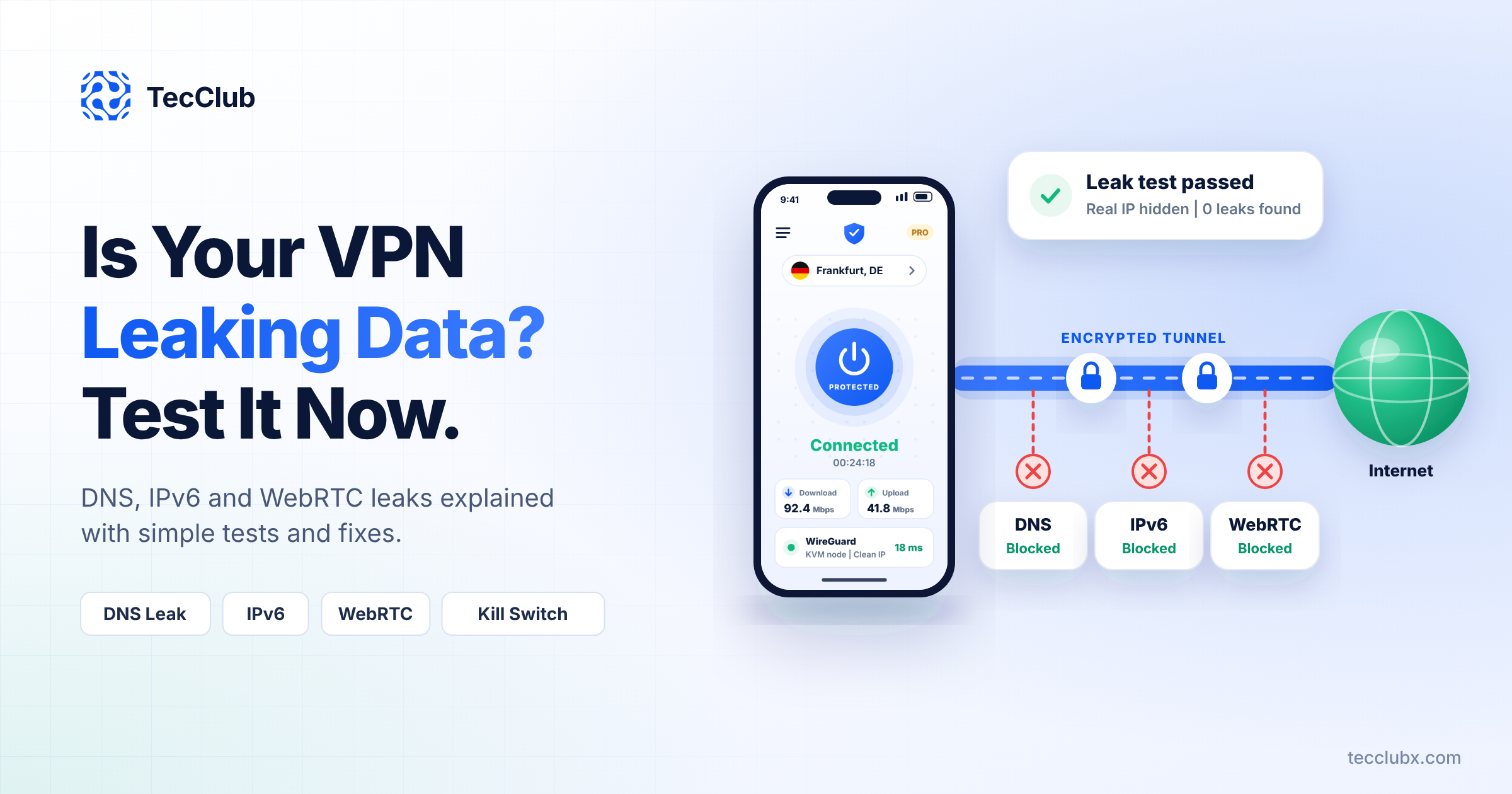
Before launch, test every important security feature, including:
- Kill Switch
- DNS leak protection
- IPv6 leak protection
- Secure authentication
- Data encryption
- API security
Security isn't something you fix after launch. It should be one of the last things you verify before going live.
✅ 11. Fine-Tune Performance
People don't stay with slow VPN services for long.
Before launch, spend time testing:
- Connection speed
- Server response times
- Switching between Wi-Fi and mobile networks
- Battery usage
- Startup speed
- Connection stability
A smooth experience often matters just as much as strong security.
✅ 12. Don't Rush Your App Store Listings
Your app store page is usually the first interaction potential customers have with your business.
Take time to prepare:
- A compelling app description
- Relevant keywords
- Professional screenshots
- Feature graphics
- Privacy information
- Support contact details
- Website links
A polished listing can significantly improve downloads and build trust before anyone even installs the app.
✅ 13. Be Ready to Support Your Customers
No matter how polished your VPN service is, people will occasionally need help.
Before launch, prepare:
- A Help Center
- Frequently Asked Questions
- Email support
- A ticket system
- Live chat if appropriate
Quick, helpful support often turns first-time users into long-term customers.
✅ 14. Keep an Eye on Your Infrastructure
Launching isn't the finish line.
Once customers begin using your VPN, you need to monitor how everything performs.
Track things like:
- Server uptime
- CPU and memory usage
- Bandwidth
- Latency
- Connection success rates
Catching small issues early prevents much bigger problems later.
✅ 15. Think Beyond Launch Day
Many businesses focus so much on launching that they forget to prepare for growth.
Ask yourself:
Can the infrastructure support thousands of new users?
Can you add more servers easily?
Can new countries be added later?
Will future protocols be supported?
Planning ahead now saves a lot of work later.
Mistakes New VPN Businesses Often Make
Even great ideas can struggle if the basics aren't in place.
Some of the most common mistakes include:
- Choosing the cheapest provider instead of the most reliable one
- Launching before proper testing
- Ignoring App Store guidelines
- Supporting only one VPN protocol
- Neglecting customer support
- Failing to monitor infrastructure
- Using confusing pricing plans
- Not planning for future growth
Fortunately, every one of these mistakes is avoidable with the right preparation.
How TecClub Technology Helps
At TecClub Technology, we help businesses launch VPN brands without the complexity of building everything from scratch.
Our solutions include:
- White-label VPN applications
- Android, iOS, Windows, and macOS apps
- Multi-protocol support, including WireGuard, OpenVPN, IKEv2, VLESS, and more
- Secure backend infrastructure
- Admin dashboard
- API integration
- Subscription management
- Cloud deployment
- Performance monitoring
- Ongoing maintenance and technical support
Whether you're starting your very first VPN business or expanding an existing one, we provide the technology and support needed to launch with confidence.
Final Launch Checklist
Before you officially launch, make sure you've checked off every major milestone:
✅ Defined your target audience
✅ Chosen a reliable white-label VPN provider
✅ Built your brand identity
✅ Customized your VPN applications
✅ Enabled multiple VPN protocols
✅ Configured your backend infrastructure
✅ Set up your admin dashboard
✅ Integrated secure payment methods
✅ Finalized your pricing plans
✅ Tested security and performance
✅ Prepared your App Store listings
✅ Set up customer support
✅ Enabled infrastructure monitoring
✅ Planned for future growth
If you've completed everything on this list, you're giving your VPN business the best possible start.
Final Thoughts
Launching a white-label VPN business today is much easier than it used to be, but success still comes down to preparation.
The businesses that stand out aren't always the ones with the biggest budgets—they're the ones that launch with reliable infrastructure, a strong brand, a smooth user experience, and a plan for long-term growth.
Take the time to get those pieces right, and you'll be in a much stronger position from day one.
At TecClub Technology, we help businesses turn VPN ideas into fully branded, scalable products with secure infrastructure, custom applications, and ongoing technical support. Whether you're launching your first VPN service or growing an existing business, we're here to help you build something that's ready for the long run.