How to Start a VPN Reseller Business with Low Investment
1. What a VPN Reseller Business Is
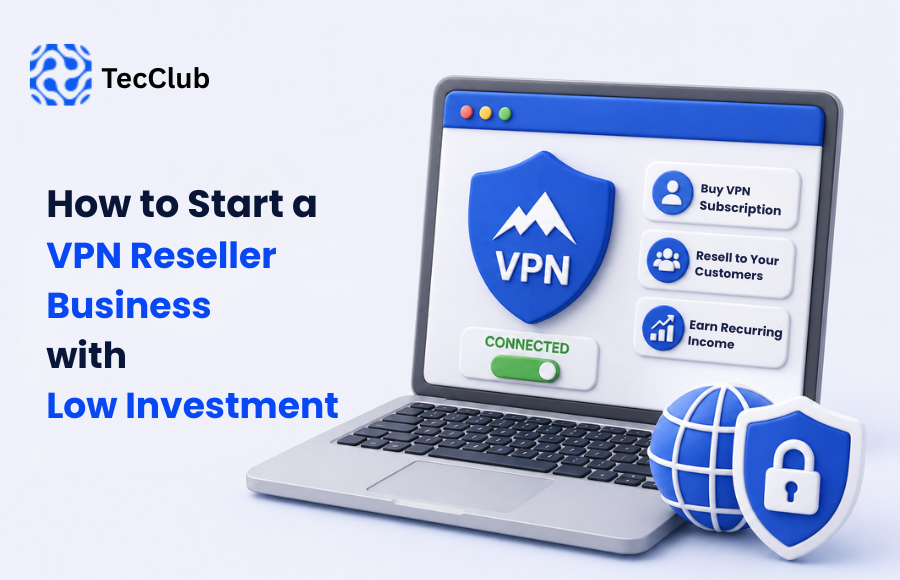
A VPN reseller business lets you sell VPN services under your own brand without building the network, apps, or core infrastructure yourself. Instead of creating a VPN from scratch, you partner with a provider that already operates the service and package it as your own offer. This makes the model attractive for entrepreneurs who want to start a VPN business with low upfront costs and limited technical complexity.
At its core, the VPN business model is simple: the provider handles the technology, and you focus on branding, pricing, customer acquisition, and support. For a small business owner or digital marketer, that can be a practical way to enter a subscription business with recurring revenue potential. It also reduces the need for heavy infrastructure investment, which is one reason many people look at this as a low cost VPN business opportunity.
How white-label VPN reselling works
In a white label VPN reseller arrangement, the provider allows you to present the service under your own brand. This may include custom branding, storefronts, and in some cases API access that helps connect your website and billing systems to the provider’s backend. Your customer sees your brand, while the provider delivers the VPN service behind the scenes.
This setup is especially useful when you want to build a VPN brand rather than simply promote someone else’s product. A white-label approach gives you more control over positioning, packaging, and pricing than a basic referral model, which can help create a more professional business presence.
VPN reseller vs affiliate model
The VPN affiliate vs reseller decision matters because the two models are very different. With an affiliate model, you send traffic to another company and earn a commission for referrals. You do not control the product, pricing, or customer experience. With a reseller model, you are closer to the customer relationship and can create your own offer and pricing structure.
| Model | What You Control | Revenue Style | Best For |
|---|---|---|---|
| Affiliate | Traffic and content promotion | Commission per sale or signup | Marketers who want a simple referral setup |
| Reseller | Branding, pricing, packaging, and customer relationship | Margin between provider cost and your selling price | Entrepreneurs building a VPN subscription business |
If your goal is to resell VPN services under your own identity and create a long-term brand, the reseller route is usually the better fit. If you only want to generate referral income, affiliate marketing may be easier to launch, but it offers less control and less room to differentiate.
Why this business can start with low investment
One of the main reasons people search for how to start a VPN reseller business with low investment is that the model avoids the biggest costs of launching a tech product. You do not need to build servers, develop VPN apps from the ground up, or hire a full engineering team. That lowers the barrier to entry significantly.
Instead, the startup costs are usually tied to the provider relationship, branding, website setup, and basic marketing. That makes the VPN reseller program approach appealing for anyone looking to test a business idea without committing to a large capital spend. As with any startup, however, low investment does not mean no effort. You still need to choose the right provider, set prices intelligently, and build a brand customers trust.
2. Benefits and Risks of Starting Small
Starting small is often the most sensible way to enter the VPN subscription business. It allows you to validate demand before taking on larger commitments. But a low investment model also comes with tradeoffs, and understanding both sides helps you make better decisions from the beginning.
Low upfront costs and recurring revenue potential
The biggest benefit is obvious: low upfront costs. Since the provider supplies the technical backbone, you can focus on a lean launch. For many founders, this creates a more manageable VPN business startup path than building a service in-house.
Another major advantage is recurring revenue potential. VPN services are subscription-based, so a reseller can benefit from repeat billing rather than relying on one-time sales. That can create more predictable cash flow if you can retain customers and keep churn under control.
Technical, legal, and customer support considerations
Even when the model is simple, you still need to pay attention to technical, legal, and support issues. The quality of the provider matters because it affects uptime, app performance, and the end-user experience. You also need to understand how the provider handles branding, account management, and service delivery.
On the legal side, make sure you understand the terms of the reseller relationship and any responsibilities you take on when you sell under your own brand. Customer support is another important consideration. If customers contact you first, you need clear workflows for handling questions, billing issues, and service problems.
Common mistakes beginners make
Beginners often make the same mistakes when they try to start a VPN business too quickly. Some choose a provider only because the pricing looks attractive, without checking support quality or server coverage. Others launch without a clear niche, making it hard to stand out in a crowded market.
Another common issue is weak positioning. If your VPN reseller pricing is not aligned with the value you present, customers may not see a reason to buy from you instead of a larger competitor. Finally, some founders overlook onboarding and support, which can hurt retention even when acquisition starts well.
3. How to Choose a Low-Cost VPN Provider
The provider you choose will shape your margins, customer experience, and brand flexibility. When evaluating options, think beyond the lowest entry price and look at the full commercial and operational picture. The goal is not just to save money at launch, but to build a foundation that can support growth.
Look for white-label branding and API access
A strong white label VPN reseller opportunity should give you branding flexibility. Look for options that let you present the product as your own and support a branded customer experience. If your workflow depends on automation, API access can be valuable because it may help connect signups, billing, and account provisioning.
These features matter because they reduce friction as you build your business. A provider that supports white-label presentation is usually better suited for a reseller than one that only offers generic affiliate links or limited partner tools.
Compare pricing, billing terms, and margins
VPN reseller pricing affects everything from your launch strategy to your long-term profitability. Compare the provider’s cost structure, billing terms, and any volume-based requirements. You want enough margin to cover marketing, payment processing, support, and other operating costs while still leaving room for profit.
It is also important to think about whether the pricing model supports monthly, annual, or bundled offers. The more flexibility you have, the easier it can be to create a clear value proposition for different customer segments.
Check support, server coverage, and app availability
Before you commit, review the provider’s support quality, server coverage, and app availability. These factors influence customer satisfaction and can make your offering easier or harder to sell. If the service is unstable or difficult to use, your own brand will absorb the frustration.
Server coverage and app availability are particularly important if you plan to market the service as a privacy or business solution. Customers expect a reliable experience, and a provider with a stronger operational footprint can make your job much easier.
4. Steps to Launch Your VPN Reseller Business
Once you have chosen a provider, the next step is to turn the partnership into a real business. A smart launch does not require a complicated setup, but it does require clarity around your niche, offer, brand, and internal processes.
Pick a niche and define your offer
Start by deciding who you are serving and why they should choose you. A focused offer helps your VPN marketing strategy because it gives your messaging direction. For example, you might position the service for privacy-conscious users, freelancers, remote workers, or small businesses.
Your offer should explain what makes your version of the service easier to buy or more relevant than a generic VPN. This is where a clear niche can improve both conversion rates and trust.
Create your brand, website, and pricing
Next, build a brand that feels credible and consistent. A professional website, clear messaging, and a simple design can all help you build a VPN brand that customers recognize. Since you are working with a white label VPN, your brand becomes one of your most important assets.
Pricing should match your positioning and leave room for margin. Keep the structure simple enough for customers to understand quickly. Whether you choose monthly plans, annual plans, or bundles, the key is to show value without making the offer confusing.
Set up payments, onboarding, and support workflows
After branding and pricing are in place, set up the operational side of the business. That includes payment collection, customer onboarding, and a support process. The smoother these workflows are, the easier it is to scale without creating a support burden.
Good onboarding can reduce confusion and improve retention. It should help customers understand how to access the service, what to expect, and where to go for help. Support workflows should also be simple and consistent so you can respond efficiently as orders grow.
5. Marketing Strategies to Get Your First Customers
A low cost VPN business still needs customers, and the marketing side is where many new resellers succeed or fail. The best approach is usually a mix of content, search visibility, and direct outreach. Because the product is subscription-based, the quality of your first customers matters as much as the quantity.
SEO content and comparison pages
SEO can be a powerful channel for a VPN reseller business because people often research VPN products before buying. Useful content can target search intent around privacy, business use, and comparisons. Comparison pages are especially effective when they help buyers understand why your offer is a strong fit.
Content that answers common questions also builds trust. If you can explain the product clearly and show how it fits a specific use case, you create more reasons for visitors to stay and convert.
Paid ads, email, and partnerships
Paid ads can help you test messaging quickly, while email can support follow-up and customer education. Partnerships may also be useful if you can work with creators, small businesses, or communities that already have an audience interested in privacy or remote work tools.
The goal is not to use every channel at once. It is to find a small number of channels that fit your budget and offer. For a startup, focused testing is usually more valuable than broad, expensive campaigns.
Positioning your VPN as a privacy or business solution
How you position the product affects how easily you can sell it. Some resellers focus on privacy, while others emphasize business use, remote work, or secure browsing. A stronger message helps your audience understand why they need the service now, not later.
If your branding and content reinforce that message consistently, your offer will feel more coherent and more credible. That makes it easier to create a repeatable VPN marketing strategy rather than relying on random promotions.
6. Scaling Your VPN Reseller Business
After you get your first customers, scaling becomes a matter of improving economics and reducing operational friction. A VPN subscription business can grow more efficiently when you increase average order value, track retention, and automate routine tasks.
Add bundles, annual plans, and upsells
Bundling can make your offer more attractive and improve revenue per customer. Annual plans may also help stabilize cash flow and reduce churn if your audience is willing to commit for longer periods. Upsells can further increase the value of each sale when they are relevant to customer needs.
The key is to keep the offer simple. Customers should understand exactly what they are buying and why the bundled or annual option is a better choice than a basic plan.
Track retention, churn, and customer lifetime value
As you scale, the most important numbers are often retention, churn, and customer lifetime value. These metrics show whether your business is growing in a healthy way. If acquisition is strong but churn is high, you may need to improve the product experience or support process.
Tracking these numbers helps you make better decisions about pricing, marketing spend, and customer service. It also gives you a clearer picture of whether the reseller model is producing sustainable margins.
Automate support and billing as you grow
Automation becomes more valuable as volume increases. Billing workflows, onboarding messages, and basic support responses can often be standardized so the business does not become overly dependent on manual work. That is especially important if you want to keep the business lean.
By automating routine tasks, you can spend more time on strategy, acquisition, and brand development. This is one of the practical advantages of a well-structured VPN reseller program when managed carefully.
7. Is a VPN Reseller Business Worth It?
For the right entrepreneur, a VPN reseller business can be a practical low investment path into the online business world. It combines a subscription model, recurring revenue potential, and relatively low startup complexity compared with building a VPN from scratch. But like any business, it works best when you approach it with a real strategy.
When the model works best
This model works best when you can bring a clear audience, a credible brand, and a focused message to the market. Entrepreneurs who understand digital marketing, content creation, or B2B positioning may have an advantage because they can promote the service more effectively.
It is also a strong fit for people who want to resell VPN services without heavy infrastructure investment. If you prefer to concentrate on branding, sales, and customer relationships, the reseller route can be more practical than building a technical product from the ground up.
How to validate demand before scaling
Before you scale, validate demand with a small launch, targeted content, or a limited campaign. Look for signs that people understand your offer and are willing to buy at your price point. This kind of testing can help you avoid overcommitting too early.
Validation does not need to be complex. The main goal is to confirm that your positioning, offer, and pricing align with what your target audience wants.
Next steps for launching with low investment
If you are serious about how to start a VPN reseller business with low investment, begin with three actions: choose a reliable white-label provider, define a simple niche offer, and build a professional brand around it. Then connect payments, create onboarding workflows, and start marketing through content and partnerships.
The opportunity is not about finding a shortcut. It is about using a smarter business model that lets you launch lean, learn quickly, and grow without the cost of building the technology yourself.
Conclusion
A VPN reseller business can be one of the more accessible ways to enter the subscription business space with limited capital. By working with a white label VPN provider, you can start a VPN business without the burden of building infrastructure from scratch. That leaves you free to focus on the parts that matter most: choosing a niche, building a brand, setting thoughtful pricing, and attracting the right customers.
The best results usually come from a careful, low-risk launch. Compare providers, understand the VPN business model, and pay attention to support, billing, and retention from the start. If you want to build a VPN brand that lasts, treat the business like a real company rather than just a side project. With the right planning, a low investment launch can become a solid foundation for recurring revenue and long-term growth.