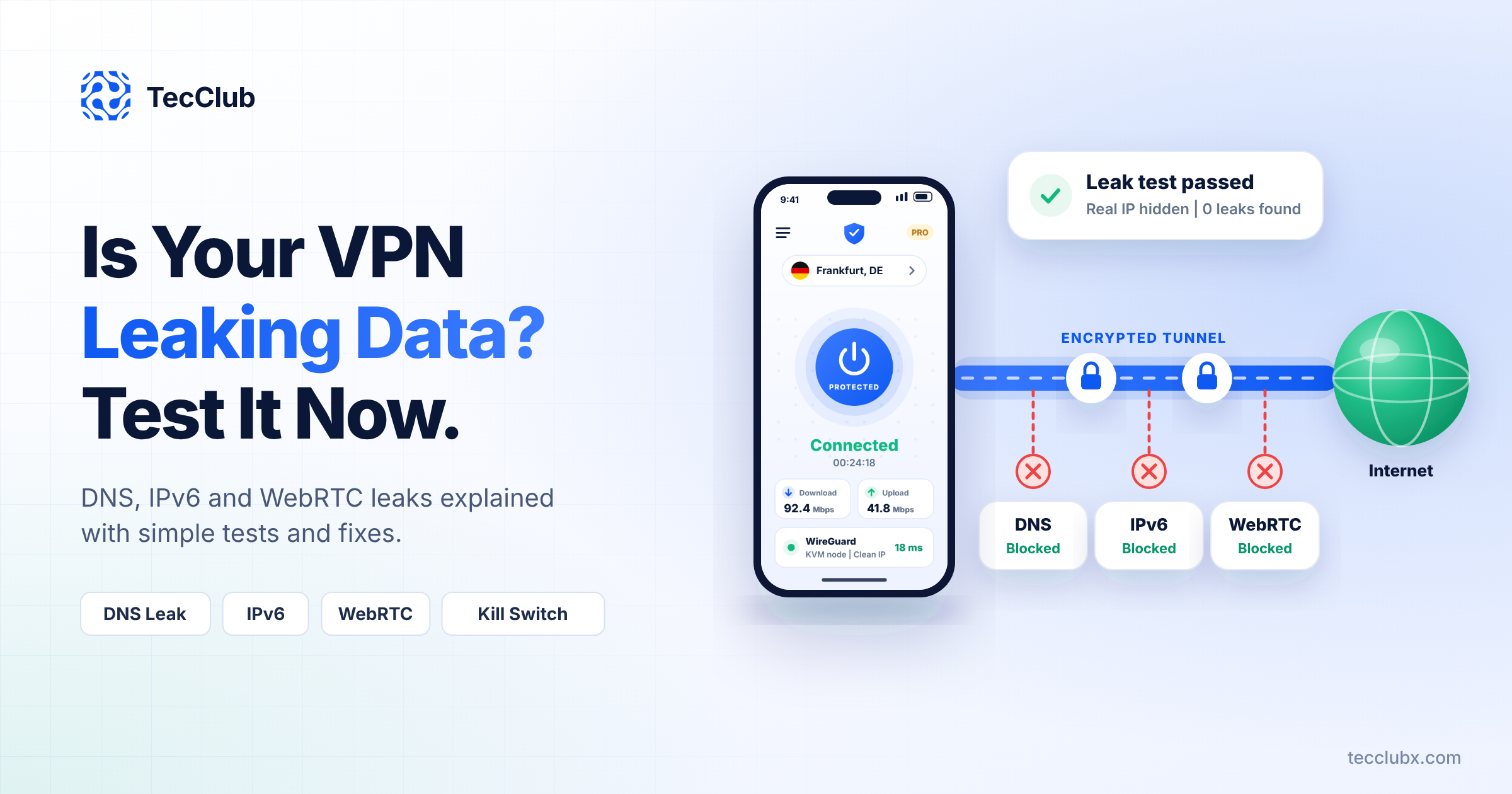

The demand for secure internet access is growing rapidly around the world. As more people become aware of online privacy and data security, VPN applications are becoming an essential tool for everyday internet use.
But modern users expect much more than simple encryption. Today’s VPN apps need to be fast, reliable, privacy-focused, and intelligent enough to handle different network environments without issues.
At TecClub Technology, we design modern VPN platforms that combine strong security with a smooth and user-friendly experience. Creating a powerful VPN application requires several key components working together behind the scenes.
Let’s take a closer look at the essential elements every modern VPN application should include.
1. Multi-Protocol Support
A modern VPN cannot rely on just one protocol. Different networks behave differently, and some protocols perform better under certain conditions.
That’s why modern VPN systems support multiple connection protocols.
Some of the most commonly used protocols include:
• OpenVPN
• WireGuard
• Shadowsocks
• V2Ray
By supporting multiple protocols, a VPN can balance speed, stability, and censorship resistance depending on the user’s network conditions.
2. Kill Switch Protection
A Kill Switch is one of the most critical security features in any VPN application.
If the VPN connection suddenly drops, the Kill Switch immediately blocks internet access. This prevents the user’s real IP address from being exposed to the internet.
Without this protection, even a short connection interruption could lead to data leaks or privacy risks.
For users who rely on VPNs for privacy, this feature is extremely important.
3. Smart Server Selection
Connection speed plays a major role in user satisfaction.
Modern VPN apps include smart server selection systems that automatically connect users to the best available server.
These systems typically analyze factors such as:
• latency
• server load
• user location
• overall network performance
By analyzing these conditions, the VPN can connect users to the fastest and most stable server available.
4. Split Tunneling
Not every application or website needs to use the VPN connection.
Split tunneling allows users to decide which apps or websites should use the VPN and which should connect directly to the internet.
This provides several advantages, including:
• faster overall performance
• access to local services
• greater control over internet traffic
For example, a user might route secure browsing through the VPN while allowing other apps to use the normal internet connection.
5. MultiHop or Double VPN
Some advanced privacy-focused VPN services include MultiHop, also known as Double VPN.
Instead of routing traffic through just one VPN server, the connection passes through multiple servers before reaching the final destination.
This adds an additional layer of privacy and makes it significantly harder for anyone to analyze or trace the traffic.
For users who prioritize maximum privacy, this feature provides an extra level of protection.
6. Custom DNS Protection
Even when traffic is encrypted, DNS requests can sometimes reveal which websites a user is visiting.
To prevent this, modern VPN apps often use custom DNS servers.
This helps prevent issues such as:
• DNS leaks
• ISP monitoring
• third-party tracking
Custom DNS protection helps ensure that browsing activity stays private.
7. Ad and Tracker Blocking
Many modern VPN services include built-in systems designed to block unwanted connections.
These systems can block:
• ads
• tracking scripts
• malicious domains
In addition to improving privacy, this feature can also speed up browsing by preventing unnecessary network requests.
8. Auto-Connect and Network Protection
People often connect to public Wi-Fi networks in places like airports, cafés, and hotels.
These networks are not always secure, which can put user data at risk.
A modern VPN should automatically activate when it detects an untrusted network. Auto-connect features ensure that users are protected without needing to manually enable the VPN each time.
This adds an extra layer of convenience and security.
9. Scalable Backend Infrastructure
A VPN application is only as strong as the infrastructure that supports it.
Modern VPN platforms require a powerful backend system capable of managing several key operations, including:
• server management
• user authentication
• protocol configuration
• subscription systems
• real-time monitoring
A scalable backend ensures that the VPN service continues to perform smoothly even as the number of users grows.
10. Clean and User-Friendly Interface
Security technology should never feel complicated for the user.
A well-designed VPN app should provide a simple and intuitive interface that includes features such as:
• one-tap connection
• easy server selection
• protocol switching
• clear connection status indicators
Good user experience design makes it easy for anyone — even non-technical users — to stay protected online.
How TecClub Technology Builds Modern VPN Applications
At TecClub Technology, we focus on building VPN solutions that combine security, performance, and scalability.
Our development approach includes:
• multi-protocol VPN integration
• smart routing systems
• cross-platform apps for mobile and desktop
• secure backend architecture
• privacy-focused design principles
This approach allows businesses to launch powerful VPN platforms that meet the needs of modern internet users.
Final Thoughts
Building a successful VPN application requires much more than basic encryption. Modern users expect intelligent features, reliable connections, and strong privacy protection.
By combining modern protocols, smart networking features, and scalable infrastructure, developers can create VPN apps that deliver both security and performance.
As online privacy continues to become more important, these components will remain the foundation of every successful VPN platform.