How Global Server Networks Improve VPN Performance
Have you ever connected to a VPN and wondered why it sometimes feels just as fast as your normal internet—and other times, everything suddenly slows down?
Maybe a website takes longer to load. A video starts buffering. Or your video call becomes a little laggy.
Most people assume it's simply their internet connection causing the problem. While that's sometimes true, there's another piece of the puzzle that often gets overlooked: the VPN server you're connected to.
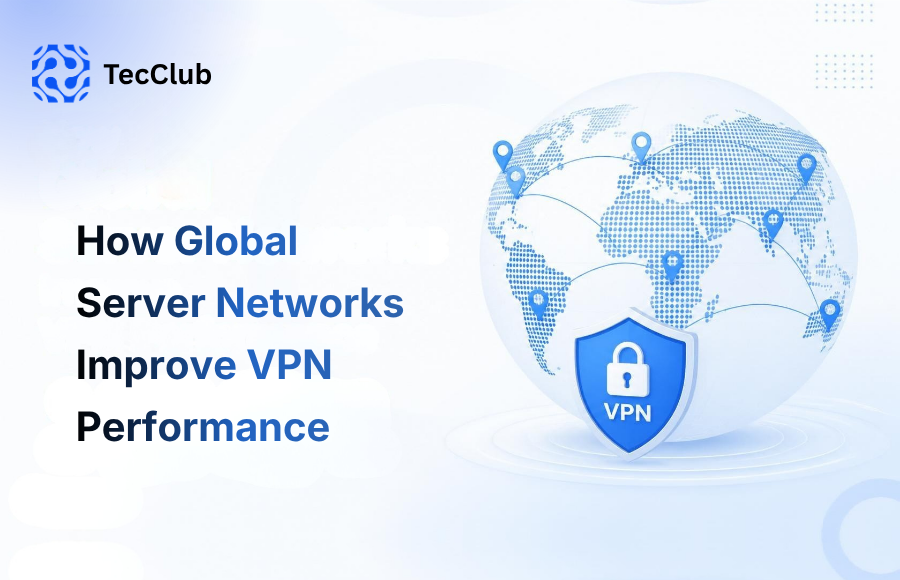
A VPN doesn't work from a single location. Behind every great VPN is a network of servers spread across different cities and countries. The quality of that network has a huge impact on how fast, stable, and reliable your connection feels.
At TecClub Technology, we build VPN solutions with global infrastructure because we believe online privacy shouldn't come at the cost of speed. A secure connection should still feel smooth, responsive, and effortless.
Let's take a closer look at why global server networks matter so much.
What Is a Global Server Network?
Think of it like traveling.
If you're driving to a nearby city, you'll probably get there fairly quickly. But if you're traveling across the world, it's naturally going to take much longer.
Your internet data works in much the same way.
Whenever you connect to a VPN, your data first travels to a VPN server before reaching the website or online service you're trying to access.
If that server is close to you, the journey is shorter.
If it's thousands of miles away, your data has a much longer trip to make.
That extra distance might only add a fraction of a second, but those tiny delays quickly add up—especially when you're streaming videos, joining meetings, gaming online, or downloading files.
A global server network gives users more nearby options, helping reduce those delays and making the entire experience feel much faster.
Why Location Makes Such a Big Difference
Many people focus only on internet speed.
But speed isn't the whole story.
Imagine ordering food from a restaurant five minutes away versus one that's across the country. Even if both chefs cook equally fast, the closer restaurant gets your meal to you much sooner.
The internet works in a similar way.
The closer your VPN server is, the less distance your data has to travel, which usually means quicker responses and a smoother experience overall.
1. Faster Connections That Feel Instant
We've all experienced that tiny pause after clicking a button or opening a webpage.
It might only last a second, but it makes an app feel slower than it really is.
This delay is called latency, and it's one of the biggest factors affecting how responsive a VPN feels.
A nearby server helps reduce latency, making everyday activities feel much smoother, whether you're browsing the web, attending an online meeting, streaming your favorite show, or playing multiplayer games.
Sometimes the improvement isn't dramatic—but it's enough to make everything feel more natural.
2. Better Speed Without Paying for Faster Internet
Many people upgrade their internet plan hoping everything will suddenly become faster.
Sometimes that's the answer.
But surprisingly, choosing a better VPN server can make just as much difference.
When your data follows a shorter, less congested path, websites open faster, downloads finish sooner, and apps respond more quickly.
It's like taking the fastest highway instead of sitting in traffic.
3. Avoiding Busy Servers
Imagine walking into your favorite coffee shop.
If there are only a few customers, your order is ready quickly.
If the shop is packed, you'll probably wait longer.
VPN servers work the same way.
When thousands of users connect to the same server, it naturally becomes busier. That can affect speeds and responsiveness.
Global server networks spread users across many different locations instead of overcrowding a handful of servers.
The result?
A faster and more consistent experience for everyone.
4. More Reliable Connections Throughout the Day
We've all experienced unstable internet at the worst possible moment—during an online meeting, while uploading important files, or halfway through watching a movie.
A strong global server network helps reduce those interruptions.
If one server becomes overloaded or temporarily unavailable, users can often be redirected to another nearby server without even noticing.
That kind of reliability is something users may not think about—but they definitely appreciate it when everything simply works.
5. Staying Fast During Busy Hours
Internet traffic changes constantly.
Evenings.
Weekends.
Holiday shopping.
Major sporting events.
Product launches.
These moments bring huge spikes in online activity.
Instead of allowing individual servers to become overloaded, modern VPN infrastructure distributes users across multiple locations, keeping performance steady even when demand suddenly increases.
6. Smart Technology Finds the Best Server for You
One of the best things about today's VPN technology is that users don't have to guess which server is best.
Modern systems can automatically consider things like:
-
How busy each server is
-
Current network traffic
-
Distance from your location
-
Available bandwidth
-
Overall connection quality
Within seconds, you're connected to the server that's likely to give you the best experience.
No complicated settings.
No technical knowledge required.
Just one tap, and the system handles the rest.
7. Smarter Routes Create Better Performance
Getting from one place to another isn't always about taking the shortest route.
Sometimes a slightly different road gets you there much faster because there's less traffic.
The internet works the same way.
Modern VPN technologies like Sing-box allow traffic to follow more intelligent routes instead of fixed paths.
If network conditions change, the system can adapt automatically, helping maintain speed and stability without users even noticing.
It's another reason why today's VPNs feel much smarter than they did just a few years ago.
8. Built for Mobile Life
Our phones rarely stay connected to the same network all day.
We leave home Wi-Fi.
Switch to mobile data.
Connect to office Wi-Fi.
Move back to 5G.
These constant changes can interrupt connections if the infrastructure isn't designed properly.
A global server network helps VPN apps handle those transitions much more smoothly, so users stay protected without constantly reconnecting.
9. Growing Without Sacrificing Performance
As more people use a VPN, the infrastructure behind it has to grow too.
Adding more servers across different regions allows providers to support more users without slowing everyone else down.
That's why scalability matters so much.
A VPN shouldn't feel slower just because it's becoming more popular.
10. Delivering a Better Experience Around the World
Today's internet is global.
Businesses have customers in different countries.
Teams work remotely across time zones.
People travel more than ever before.
A worldwide server network helps ensure users enjoy a fast, reliable connection wherever they happen to be.
Whether someone connects from Asia, Europe, North America, or anywhere else, the experience should feel just as smooth.
11. Performance Doesn't Take Care of Itself
Building a server network is only the beginning.
Keeping it running efficiently requires constant attention.
Teams continuously monitor server health, traffic levels, bandwidth usage, and connection quality to spot potential issues before users ever notice them.
It's the kind of work that happens quietly in the background—but it's a big reason why great VPNs stay reliable day after day.
12. Security and Speed Should Work Together
Some people think stronger security automatically means slower performance.
Thankfully, that's no longer the case.
Modern VPN infrastructure combines powerful encryption with intelligent routing, load balancing, and optimized server networks to deliver both security and speed at the same time.
Users shouldn't have to choose between protecting their privacy and enjoying a fast internet connection.
The best VPNs make both possible.
How TecClub Technology Builds High-Performance VPN Solutions
At TecClub Technology, we believe the best technology is the kind users don't have to think about.
That's why we design VPN platforms with globally distributed servers, intelligent routing, scalable cloud infrastructure, real-time monitoring, and modern networking technologies that work together behind the scenes.
Our goal is simple: deliver VPN experiences that feel fast, stable, secure, and reliable—whether someone is connecting from home, the office, or anywhere else in the world.
Final Thoughts
Most users never stop to think about what happens after they press the Connect button on a VPN.
And honestly, they shouldn't have to.
A well-designed global server network quietly does the heavy lifting—reducing delays, balancing traffic, maintaining stable connections, and keeping everything running smoothly in the background.
When that infrastructure is built the right way, users simply notice that everything feels fast, reliable, and effortless.
That's exactly the kind of experience we aim to create at TecClub Technology. By combining scalable global infrastructure, intelligent networking, and modern VPN technologies, we build solutions that help businesses deliver secure, high-performance connectivity their users can rely on every single day.