
Behind the Scenes of a Secure VPN Architecture
When someone opens a VPN app and taps “Connect,” it feels almost effortless.
One second they’re exposed on a public network.
The next, they’re protected.
But that simplicity is intentional. Behind that single tap lives a carefully designed system working quietly in the background—making thousands of decisions per second to keep the user safe, private, and connected.
At TecClub Technology, we believe users deserve more than a green “Connected” label. They deserve real protection. So here’s a human look at what actually happens behind the scenes of a secure VPN architecture.
It All Begins Before the App Exists
A secure VPN isn’t something you “add” later.
Long before an app is designed or a server goes live, we start with one simple question:
How do we protect users even when things go wrong?
That mindset shapes the entire architecture.
We plan for:
-
Clear separation between apps and servers
-
Minimal exposure of sensitive data
-
Strict communication rules
-
Safe failure behavior
Good architecture quietly prevents problems users will never even know existed—and that’s exactly the point.
The VPN App: The User’s Silent Bodyguard
The VPN app is the only part users see—but it’s doing far more than showing a button and a server list.
Behind the scenes, the client app:
-
Manages secure connections
-
Stores credentials safely
-
Detects unsafe networks
-
Responds instantly to connection drops
If Wi-Fi disconnects, switches networks, or becomes unstable, the app doesn’t panic—and the user doesn’t have to. Protection stays on by default.
That’s how a VPN should feel: calm, automatic, reliable.
Encrypted Tunnels: Privacy in Motion
At the heart of every VPN is encryption—but encryption alone isn’t enough.
When a user connects, their data travels through a secure tunnel, which:
-
Scrambles traffic so it can’t be read
-
Hides activity from ISPs and network owners
-
Protects against Wi-Fi snooping
We choose modern VPN protocols carefully, balancing:
-
Strong security
-
High speed
-
Stable connections
Because privacy should never feel slow or fragile.
Verifying Users Without Exposing Them
A secure VPN needs to confirm users—but never at the cost of their privacy.
That’s why we rely on:
-
Token-based authentication
-
Secure session handling
-
Automatic expiration
-
Protection against unauthorized access
The system verifies access quietly, without exposing personal data or creating unnecessary logs.
Users connect. The system handles the rest.
Servers Built to Protect, Not Watch
VPN servers are where trust either exists—or breaks.
Our server architecture is designed with one rule in mind:
Collect less. Protect more.
That means:
-
Hardened server configurations
-
Isolated environments
-
Restricted access
-
Frequent security updates
We intentionally avoid storing unnecessary user data. The less data that exists, the less there is to protect—and the less there is to leak.
DNS Protection: The Invisible Leak Most Users Never See
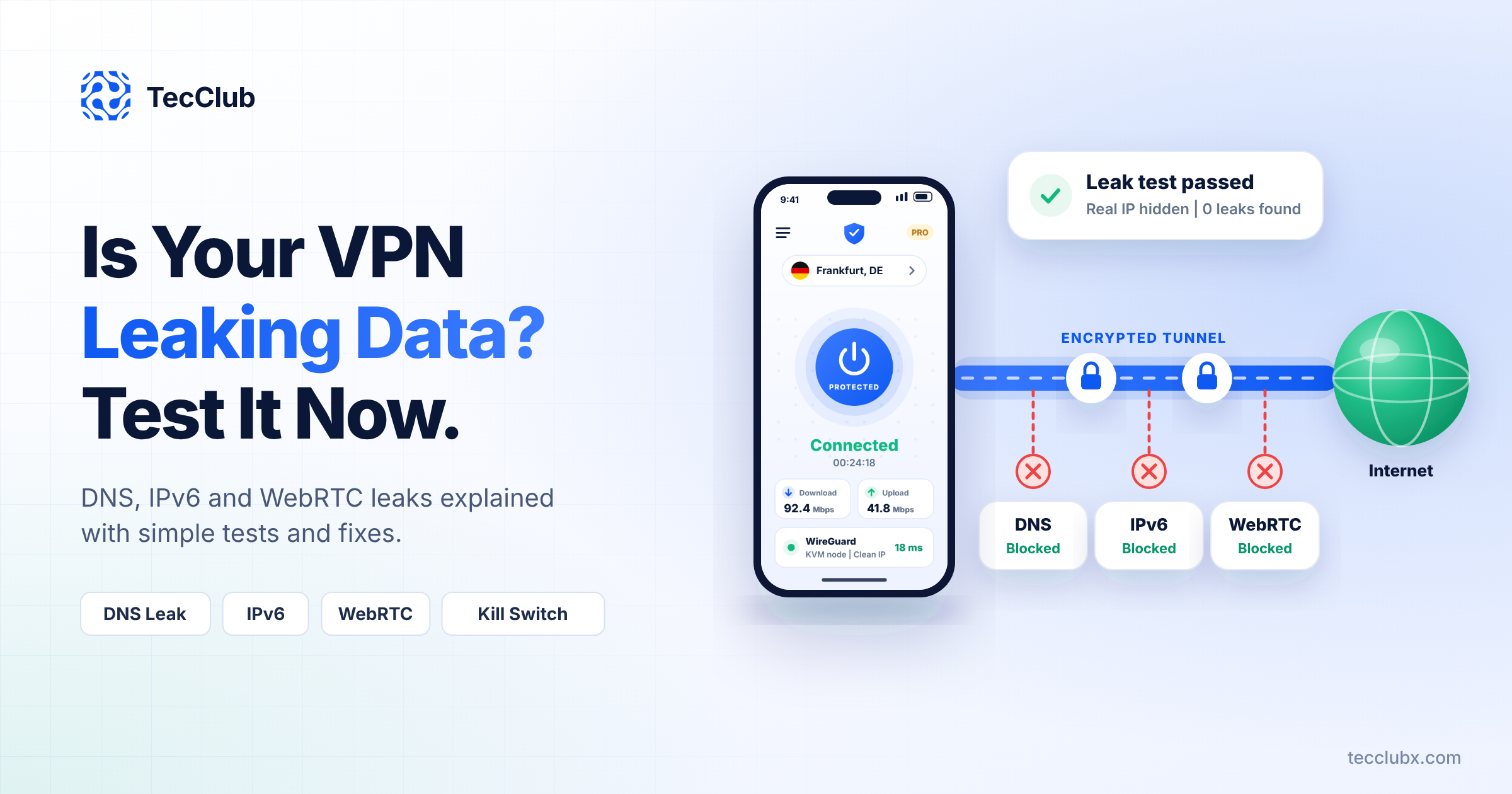
Many people don’t realize this, but DNS leaks are one of the most common privacy failures in VPN apps.
Even if traffic is encrypted, a DNS leak can quietly reveal:
-
Browsing behavior
-
Websites visited
-
App activity
That’s why we build:
-
Custom DNS handling
-
DNS leak protection
-
Secure routing
Every request stays inside the tunnel—not just the obvious ones.
Fail-Safes That Work Even When Users Aren’t Watching
People shouldn’t have to babysit their VPN.
So we design safety features that work automatically:
-
Kill switch that blocks traffic instantly if the VPN drops
-
Auto-connect on untrusted networks
-
Split tunneling with safe defaults
These features don’t demand attention—they quietly step in when needed.
Keeping the System Safe Without Spying on Users
A secure VPN infrastructure also needs protection from abuse and attacks.
We monitor systems carefully using:
-
Health checks
-
Rate limiting
-
DDoS protection
-
Infrastructure monitoring
All without invading user privacy.
Security and respect go hand in hand.
Security Is a Process, Not a Finish Line
Threats evolve. Networks change. Technology moves fast.
That’s why we constantly:
-
Test for leaks and vulnerabilities
-
Audit both server and client behavior
-
Apply security patches
-
Improve performance and stability
A VPN that isn’t maintained is a VPN users can’t trust.
What This Means for Real Users
A well-built VPN architecture means:
-
No sudden data exposure
-
No silent leaks
-
Stable connections
-
Real privacy—not marketing promises
Users may never see this complexity—and that’s a good thing. The best security feels invisible.
Why TecClub Technology Builds VPNs Differently
We don’t treat VPN security as a feature to advertise.
We treat it as an engineering responsibility.
Our VPN architectures are:
-
Designed for real-world threats
-
Built to scale
-
Optimized for performance
-
Focused on user trust
Whether it’s a new VPN product or an upgrade to an existing one, we build systems people can rely on—without needing to understand what’s happening behind the curtain.
Final Thoughts
A secure VPN doesn’t happen by accident.
It’s the result of careful planning, thoughtful defaults, strong encryption, and constant improvement—all working quietly in the background.
So the next time a user taps “Connect,” they’re not just starting a tunnel.
They’re stepping into an ecosystem built to protect them—even when they don’t think about it.
That’s how we build VPNs at TecClub Technology—with care, intention, and trust at the center.