
Choosing the Right VPN Protocol for Your App: Our Real-World Guide for 2026
If you’re building a VPN app in 2026, there’s one decision that quietly shapes everything your users will experience — even if they never notice it directly.
That decision is the VPN protocol.
Protocols are the invisible engine of a VPN. They decide whether your app feels fast or frustrating, reliable or flaky, private or questionable. You can have a beautiful interface and great marketing, but if the protocol choice is wrong, users will feel it — through slow speeds, dropped connections, or blocked access.
At TecClub Technology, we’ve spent years building VPN systems in real-world conditions: unstable mobile networks, high-censorship regions, public Wi-Fi, enterprise environments, and everyday consumer use. This guide isn’t theory — it’s how we actually choose VPN protocols in 2026.
Why Protocol Choice Matters More Than Ever
A few years ago, VPN protocol decisions were simple. Pick one, configure it, ship the app.
That no longer works.
Today’s VPN users are:
-
On mobile networks that constantly switch
-
Streaming, gaming, and video calling
-
Traveling across regions with different restrictions
-
More aware of privacy than ever
-
Less patient with slow or unreliable apps
One protocol can’t handle all of that.
In 2026, the best VPN apps aren’t built around a protocol — they’re built around adaptability.
The VPN Protocols We Trust in 2026 (and Why)
WireGuard — When Speed Really Matters
WireGuard has become the first choice for most modern VPN apps — and for good reason.
We use WireGuard because:
-
It’s incredibly fast
-
It connects almost instantly
-
It uses very little battery
-
It handles mobile network changes smoothly
Best for
-
Mobile VPN apps
-
Streaming and gaming
-
Everyday privacy use
Where it struggles
-
Heavy censorship environments
-
Situations that require advanced obfuscation
WireGuard is amazing — but it shouldn’t be your only option.
OpenVPN — Still the Reliable Backbone
OpenVPN isn’t new, but it’s still one of the most dependable tools we have.
We still use OpenVPN because:
-
It’s proven and battle-tested
-
It works well where VPNs are restricted
-
It’s extremely configurable
-
It’s trusted in enterprise environments
Best for
-
Business and enterprise VPNs
-
High-security use cases
-
Regions with traffic inspection
Trade-offs
-
Heavier than modern protocols
-
Not as fast on mobile as WireGuard
OpenVPN is like a reliable old engine — not flashy, but dependable when things get tough.
IKEv2/IPSec — Quietly Excellent for Mobile Users
IKEv2 doesn’t get much hype, but it shines where it matters most: mobility.
We use IKEv2 because:
-
It reconnects instantly when networks change
-
It’s extremely stable on phones
-
It’s well-supported by operating systems
Best for
-
Users switching between Wi-Fi and mobile data
-
Corporate mobile VPNs
Limitations
-
Can be blocked in restrictive regions
-
Less flexible than OpenVPN
When users are constantly moving, IKEv2 keeps things smooth without them even noticing.
Protocols Built for Censorship & Restricted Networks
Shadowsocks — Fast, Simple, and Harder to Detect
Shadowsocks isn’t a traditional VPN, but it plays a critical role.
We use it because:
-
It’s lightweight and fast
-
It blends into normal traffic
-
It works where VPNs are blocked
Best for
-
High-censorship regions
-
Users who need access first, privacy second
It’s simple, effective, and often the difference between “works” and “blocked.”
VLESS & VMess — Designed for Modern Privacy Challenges
These protocols were created specifically to deal with today’s surveillance and filtering systems.
We rely on them because:
-
They resist deep packet inspection
-
They offer flexible routing
-
They perform well under restrictions
Best for
-
Privacy-focused users
-
Regions where VPN blocking is aggressive
They’re not beginner-friendly — but they’re incredibly powerful.
Sing-box — The Foundation of Next-Gen VPN Apps
Sing-box isn’t just a protocol — it’s a modern VPN framework.
We love it because:
-
It supports multiple protocols in one system
-
It simplifies complex routing logic
-
It’s easier to scale and extend
-
It’s future-ready
Best for
-
Large VPN platforms
-
White-label VPN products
-
Apps that need flexibility long-term
Sing-box lets us build VPNs that evolve instead of getting stuck.
Why Multi-Protocol VPNs Win in 2026
Here’s the truth:
There is no “best” VPN protocol.
There is only the best protocol for this user, on this network, right now.
That’s why we build VPN apps that:
-
Automatically switch protocols when needed
-
Detect blocks and restrictions
-
Adapt to network conditions
-
Let advanced users choose manually
-
Recover silently when things fail
If WireGuard is blocked, the app switches.
If the network is unstable, it adapts.
If performance drops, it finds a better path.
Users don’t want to think about protocols — they just want it to work.
How We Match Protocols to Real Use Cases
| Use Case | What We Recommend |
|---|---|
| Mobile VPN App | WireGuard + IKEv2 |
| Streaming & Speed | WireGuard |
| Business VPN | OpenVPN + IKEv2 |
| Heavy Censorship | VLESS / VMess / Shadowsocks |
| Advanced Privacy | MultiHop + OpenVPN |
| Scalable Platforms | Sing-box |
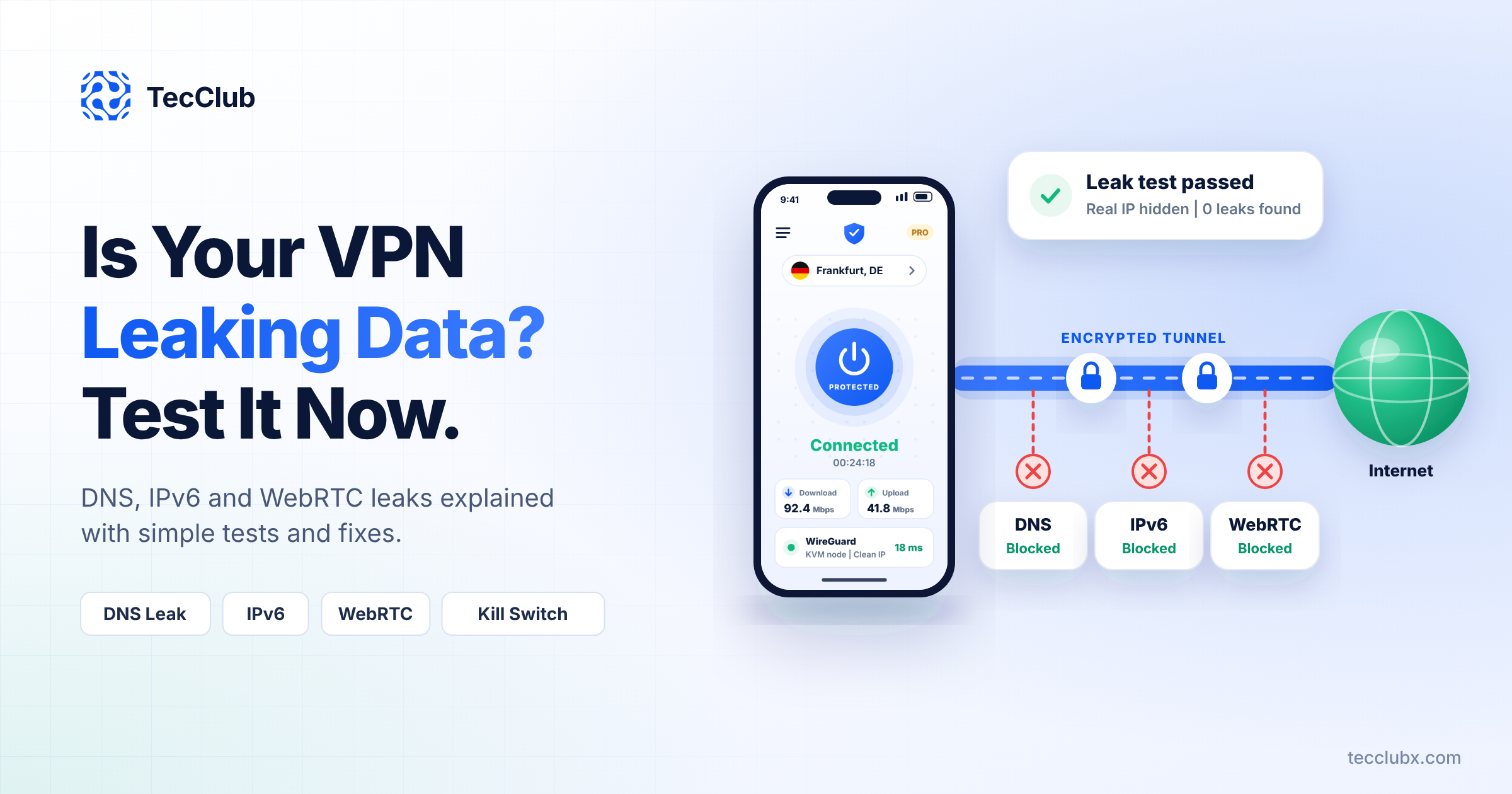
Protocols Alone Don’t Create Security
Even the best protocol can fail if the rest of the system is weak.
That’s why we always pair protocols with:
-
Kill switches
-
DNS leak protection
-
Custom encrypted DNS
-
MultiHop routing
-
Strong authentication systems
Privacy isn’t one feature — it’s a system.
Why Our Approach Works
At TecClub Technology, we don’t push a “one-protocol-fits-all” solution.
We:
-
Study your users
-
Understand your regions
-
Analyze network conditions
-
Design flexible architectures
-
Build VPNs that can grow and adapt
Whether you’re launching a consumer VPN, an enterprise solution, or a white-label product, we design the protocol stack around your reality — not assumptions.
Final Thoughts
In 2026, the best VPN apps aren’t defined by a single protocol.
They’re defined by:
-
Adaptability
-
Reliability
-
Thoughtful engineering
-
Real-world performance
Choosing the right VPN protocol isn’t about trends — it’s about building something users can trust every day.
That’s how we build VPNs at TecClub Technology — smart, flexible, and ready for the real world.