Why Custom DNS Improves VPN Security — And How We Build It In
When most people think about VPN security, they picture strong encryption, locked tunnels, and hidden IP addresses. That makes sense—those are the visible parts of a VPN.
But there’s a quieter piece working behind the scenes that often gets ignored, even though it’s just as important.
DNS.
If encryption is the lock on your door, DNS is the address book that tells the internet where you’re going. And if that address book isn’t protected, your privacy can leak—no matter how strong your VPN encryption is.
At TecClub Technology, this is why we treat custom DNS as a core security feature, not an optional extra. It’s one of the biggest differences between a VPN that looks secure and one that actually is secure.
Let’s talk about why it matters—and how we build it properly.
DNS Sounds Boring… Until It Leaks Your Privacy
Every time you open a website, launch an app, or stream a video, your device asks a simple question:
“Where do I find this site?”
That question is sent through DNS.
Even if your data is encrypted, those DNS requests can still reveal:
-
Which websites you visit
-
Which apps you use
-
When you’re online
-
Sometimes even where you’re located
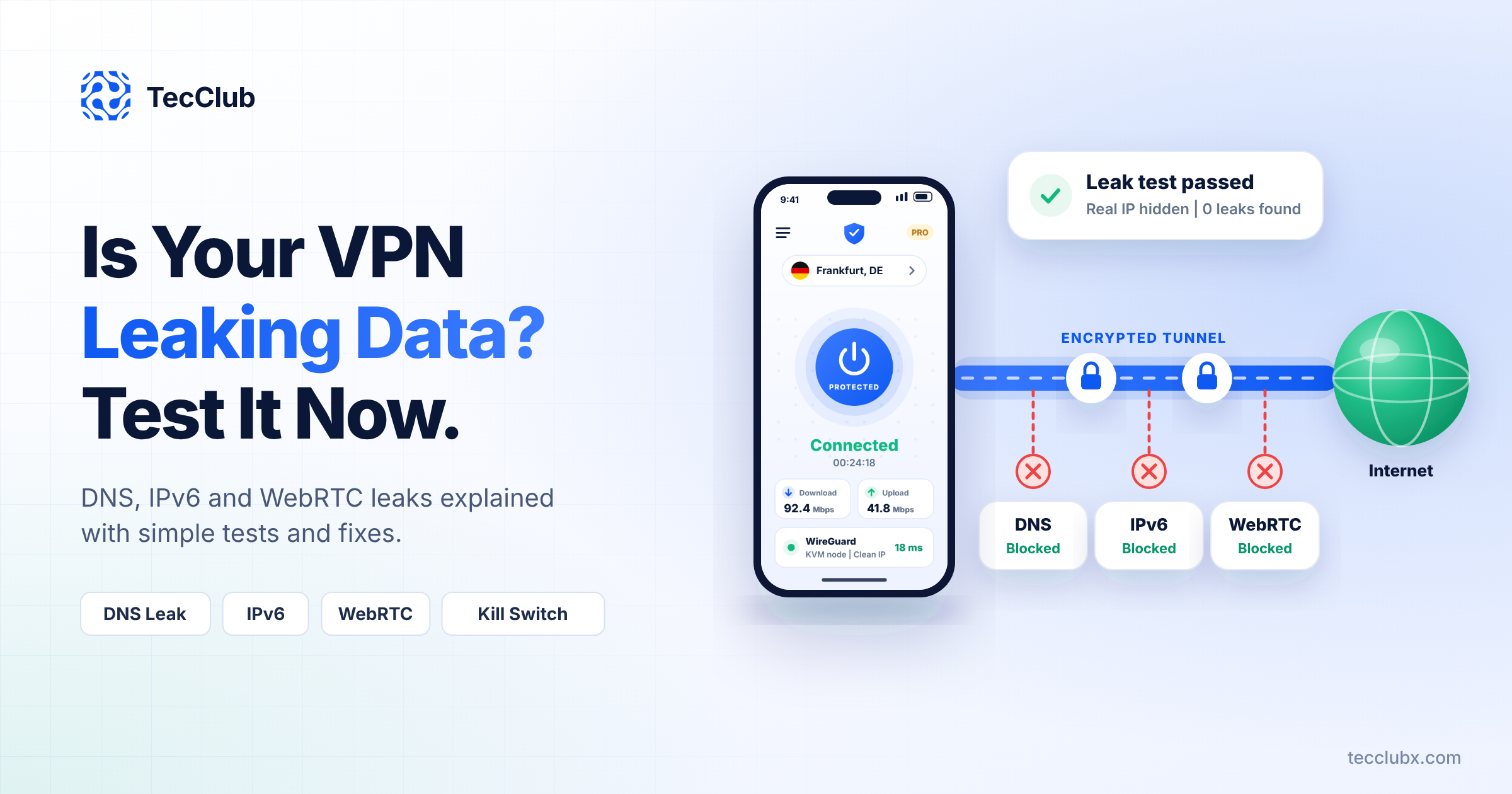
This is what’s known as a DNS leak, and it’s one of the most common reasons VPN users are unknowingly exposed.
The scary part?
Most users never realize it’s happening.
Why Default DNS Is Quietly Dangerous
By default, your device relies on:
-
Your ISP’s DNS
-
Public DNS services
-
Operating system–level resolvers
These systems can:
-
Log your activity
-
Be monitored or filtered
-
Inject ads or redirects
-
Leak requests outside the VPN tunnel
On public Wi-Fi—cafés, airports, hotels—DNS can even be hijacked, sending users to fake or malicious websites.
So yes, you can have a VPN turned on…
…and still leave a trail behind.
That’s why a VPN without custom DNS is only doing half the job.
How Custom DNS Actually Makes a VPN Safer
1. It Stops DNS Leaks at the Source
When DNS is routed inside the VPN tunnel:
-
Requests stay encrypted
-
Nothing reaches the ISP
-
Public Wi-Fi routers see nothing useful
Your browsing intent stays private—not just your traffic.
2. It Blocks Tracking Before It Starts
Instead of letting ads and trackers load and then trying to block them later, custom DNS stops them before the connection even happens.
We block:
-
Ad networks
-
Tracking scripts
-
Analytics endpoints
-
Known malware and phishing domains
This means:
-
Less tracking
-
Cleaner browsing
-
Safer connections
All without slowing the device down.
3. It Makes the Internet Feel Faster
People don’t expect a security feature to improve speed—but DNS can.
Our custom DNS servers are:
-
Optimized for VPN traffic
-
Cached intelligently
-
Located close to VPN servers
Combined with ad and tracker blocking, users experience:
-
Faster page loads
-
Lower latency
-
Less data usage
Privacy and performance don’t have to fight each other.
4. It Protects More Than Just the Browser
Unlike browser extensions, DNS-level protection:
-
Works across all apps
-
Covers background services
-
Protects mobile and desktop traffic
Whether it’s a messaging app, a game, or a system update—everything stays protected.
How We Build Custom DNS at TecClub Technology
We don’t just “point” the VPN to a DNS server and call it done. We design DNS as part of the VPN’s backbone.
Here’s what that looks like.
Private DNS Infrastructure
We deploy dedicated DNS resolvers that:
-
Don’t log user activity
-
Aren’t shared with ISPs
-
Are tuned specifically for VPN use
This gives us full control over privacy, reliability, and performance.
Encrypted DNS (DoH & DoT)
We use:
-
DNS over HTTPS (DoH)
-
DNS over TLS (DoT)
Even inside the VPN tunnel, DNS stays encrypted. It’s privacy with an extra safety net.
Built-In DNS Leak Protection
Our apps actively:
-
Override system DNS settings
-
Lock DNS inside the tunnel
-
Prevent fallback to unsafe resolvers
-
Auto-correct DNS on reconnect
This is especially important on Android, Windows, and split-tunnel setups—where leaks are most likely to happen.
Smart DNS Routing
Not all networks behave the same.
We dynamically route DNS based on:
-
Selected VPN server
-
Network type (Wi-Fi or mobile data)
-
Active protocol (WireGuard, OpenVPN, V2Ray, Sing-box)
This keeps apps working smoothly while maintaining security.
User-Controlled DNS Options (Without Risk)
For advanced users, we support:
-
Privacy-focused DNS
-
Ad-blocking DNS
-
Malware protection DNS
-
Custom DNS entries
All without breaking the VPN tunnel or introducing leaks.
When DNS and VPN Work Together
A VPN isn’t just about hiding an IP anymore.
When you combine:
-
Strong encryption
-
Kill switch
-
Split tunneling
-
Multi-protocol support
-
Custom DNS
You don’t just protect traffic—you control the entire connection path.
That’s real privacy.
A Simple Real-World Example
You connect to airport Wi-Fi.
Without custom DNS:
-
DNS requests hit the airport router
-
Activity can be logged or redirected
With our VPN + custom DNS:
-
All requests are encrypted
-
No tracking
-
No redirects
-
No leaks
Same situation. Completely different outcome.
Why We Treat DNS as a Core Feature
At TecClub Technology, we believe DNS should never be an afterthought.
That’s why every VPN solution we build includes:
-
Custom DNS by default
-
Leak-proof routing
-
Ad & tracker blocking
-
Multi-platform compatibility
-
Enterprise-grade stability
Whether it’s a consumer VPN, enterprise solution, or white-label product, DNS security is built into the foundation.
Final Thoughts
Encryption protects your data.
DNS protects your intentions.
Without custom DNS, VPN users still leave breadcrumbs behind. With it, privacy becomes complete—and the internet feels faster, cleaner, and safer.
That’s why custom DNS is one of the most powerful—and most overlooked—VPN security features.
And that’s why we build it right from day one.