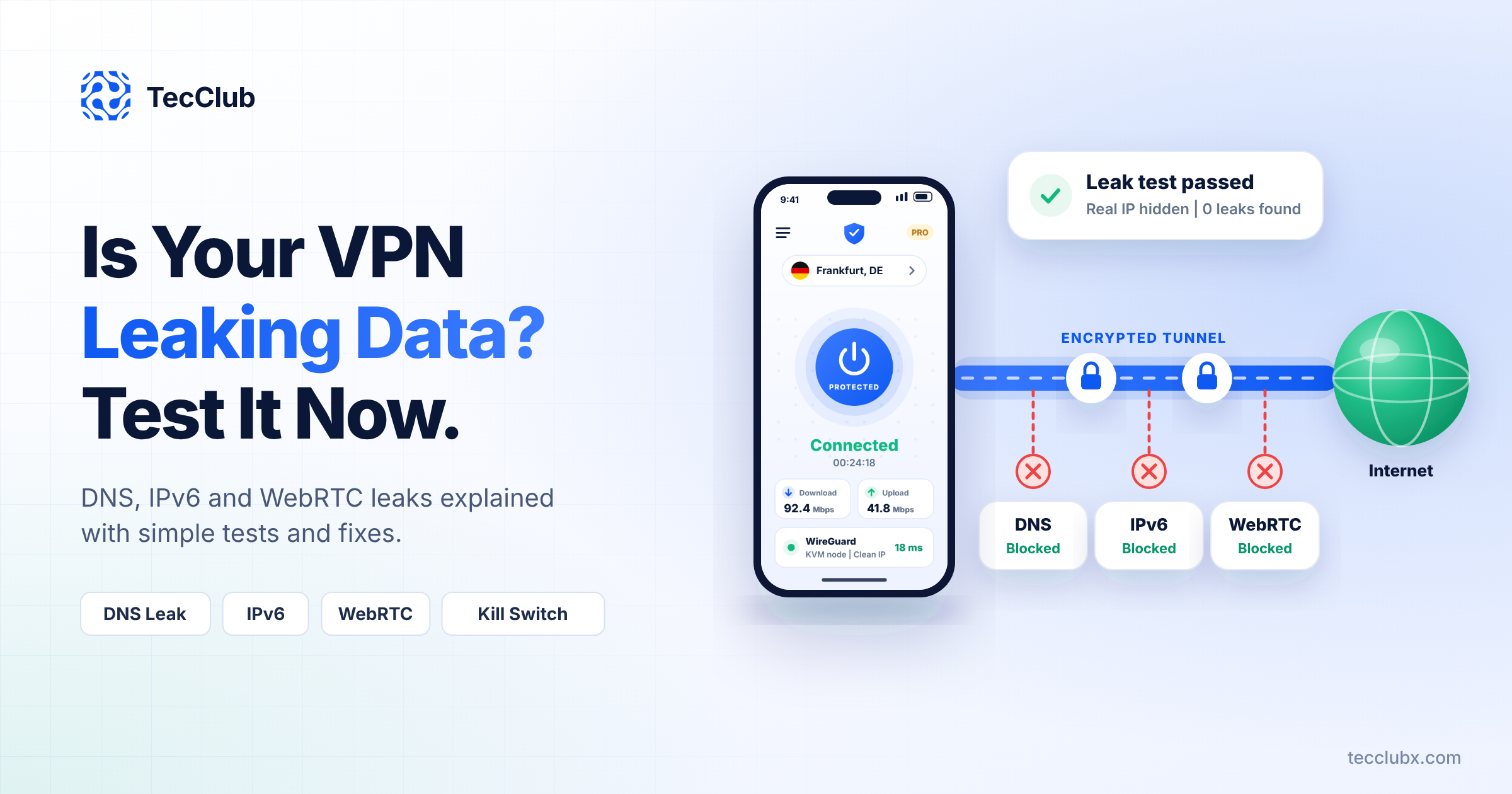

Building a MultiHop VPN: Multi-Layer Encryption, Made for Real People
Online privacy used to feel like a niche topic — something only hackers, programmers, or cybersecurity experts cared about.
But today? Anyone with a phone or laptop has a reason to worry.
Data brokers sell your browsing habits.
Your ISP watches what you do online.
Public Wi-Fi networks are basically playgrounds for hackers.
People don’t just want protection…
they want extra protection.
Layers of it.
That’s where MultiHop VPN technology comes in.
Instead of sending your traffic through one VPN server, MultiHop routes it through two or more servers, each adding its own layer of encryption and anonymity. Picture your online identity tucked inside several locked boxes, not just one.
At TecClub Technology, we build VPN systems with MultiHop support that are fast, stable, and genuinely secure — not just “secure on paper.” Here’s how MultiHop works and how we engineer it to actually protect people in the real world.
What Is MultiHop VPN? (Let’s Keep It Simple)
A traditional VPN:
You → 1 Server → Internet
A MultiHop VPN:
You → Server #1 → Server #2 → Internet
Some setups even use three or more servers for extreme privacy.
Each hop:
-
adds another encryption layer
-
gives you a new IP address
-
hides the previous hop
Meaning your digital trail becomes harder — sometimes practically impossible — to follow.
Why MultiHop Is Such a Big Deal
1. Your IP Changes Multiple Times
Anyone trying to trace you runs into a maze of VPN nodes.
By the time they hit the exit server, your real identity is long gone.
2. If One Server Is Monitored, You’re Still Safe
A single-hop VPN is “all eggs in one basket.”
MultiHop spreads trust across several servers — even if one fails, your privacy stays intact.
3. Your ISP Sees… Nothing Useful
Your ISP can only see encrypted traffic going into Server #1.
They can’t see where it’s going next or what you’re doing inside the tunnel.
4. Protection From Malicious Exit Nodes
Even if the exit node is compromised, it never sees your real IP.
That’s one of MultiHop’s biggest advantages.
How We Build MultiHop the Right Way
Creating a proper MultiHop system isn’t just linking two servers together.
Poorly built MultiHop = Slow internet + potential leaks.
That’s why our architecture focuses on smart engineering and real-world usability.
🔐 1. Separate Encryption Tunnels for Each Hop
Each hop uses its own encryption protocol.
For example:
-
Hop 1 → WireGuard
-
Hop 2 → OpenVPN
-
Hop 3 → IKEv2
Even if one layer is cracked (extremely unlikely), the others keep you protected.
⚡ 2. Smart Routing That Keeps You Fast
MultiHop doesn’t have to feel slow.
We optimize routing with:
-
latency-aware pairing
-
automatic load balancing
-
smart node selection
-
geo-efficient server combinations
This keeps things smooth — streaming, browsing, everything.
🧩 3. Every Server Can Play Any Role
Our backend lets any server act as:
-
an entry node
-
a middle relay
-
an exit node
This makes the network flexible and scalable.
📡 4. Dynamic Hop Selection for Users
Users can choose:
-
preset MultiHop routes
-
fully custom routes
-
or “best route” based on speed
Our system makes sure server pairs are logical — no weird slowdowns or bottlenecks.
🛡 5. Extra Protection for Metadata
We secure not just your browsing, but the “information around the browsing,” like:
-
DNS leaks
-
timestamps
-
handshake data
-
traffic patterns
Every hop uses encrypted DNS and strict no-log infrastructure.
Who Actually Needs MultiHop?
A standard VPN is fine for daily browsing.
But MultiHop is built for people who need serious privacy.
Like:
🔹 Privacy enthusiasts
Users who want maximum anonymity and zero digital footprints.
🔹 Journalists, activists, and researchers
Especially in high-surveillance regions.
🔹 Businesses with sensitive data
Remote teams exchanging confidential information.
🔹 Users in restricted or censored countries
MultiHop adds an extra layer of stealth.
MultiHop Isn’t a Marketing Term — It’s Real Protection
Some VPN brands add MultiHop just to check a box.
But without proper engineering, MultiHop can become:
-
slow
-
unstable
-
leaky
-
insecure
At TecClub, MultiHop is built as part of the foundation — not a bolt-on feature.
Final Thoughts: Multiple Hops, Multiple Layers of Trust
Online threats are evolving quickly, and users want more than basic protection.
MultiHop VPN gives them exactly that — stacked encryption, layered anonymity, and a safer, more private online experience.
At TecClub Technology, we build VPN apps that include:
-
MultiHop
-
Private DNS
-
Zero-log systems
-
Smart routing
-
Kill switches
-
Multi-protocol support
-
Enterprise-level encryption
If you’re building a next-gen VPN service, MultiHop isn’t a “bonus option.”
It’s a must-have — and one of the strongest privacy features you can offer today.