Have you ever used an app that somehow seemed to know exactly what you needed?
Maybe it recommended the right content at the perfect time, adjusted performance automatically when your internet slowed down, or reminded you about something before you even realized it yourself.
That’s not accidental anymore—it’s the result of predictive systems.
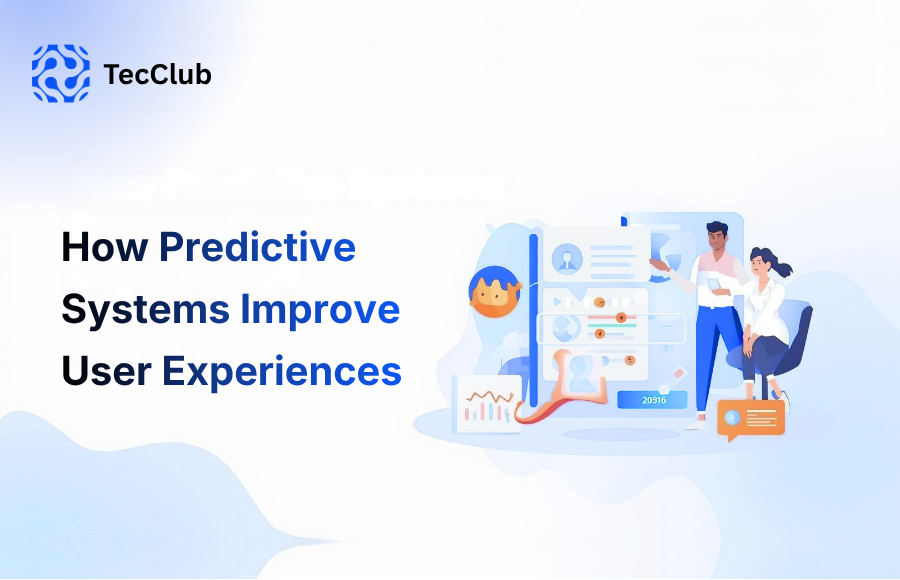
Modern applications are becoming smarter by learning from user behavior, real-time data, and system activity to create experiences that feel faster, smoother, and more personalized.
At TecClub Technology, we build intelligent systems that don’t just react to users—they adapt to them in real time to make digital experiences feel effortless.
So, What Exactly Are Predictive Systems?
In simple terms, predictive systems help applications anticipate what users might need before they ask for it.
They use things like:
- User behavior
- Real-time analytics
- Activity patterns
- AI-driven logic
- System monitoring
to make smart decisions automatically.
Instead of waiting for problems to happen, the system predicts them early and responds in advance.
That’s what makes modern apps feel “smart.”
Why Predictive Experiences Matter
People today expect apps to work smoothly without requiring constant effort.
Nobody wants to:
- Repeatedly adjust settings
- Search endlessly for features
- Deal with slow performance
- Fix technical problems manually
Users simply want apps that feel intuitive and responsive.
Predictive systems help remove friction by allowing apps to quietly optimize the experience in the background.
And honestly, users may never notice the technology itself—but they will notice how easy the app feels to use.
1. Personalized Experiences That Feel More Human
One of the biggest benefits of predictive systems is personalization.
Apps can learn what users prefer and adjust accordingly.
For example:
- Recommending content users actually care about
- Highlighting frequently used features
- Suggesting helpful actions
- Customizing dashboards automatically
Instead of giving everyone the same generic experience, the app begins to feel more personal and natural.
2. Preventing Problems Before Users Notice Them
The smartest systems don’t wait for issues to happen—they predict them early.
Modern applications can detect things like:
- Slow network conditions
- Server overloads
- Weak connections
- Performance bottlenecks
before they impact the user experience.
In VPN systems, predictive logic can automatically:
- Switch users to faster servers
- Adjust routing paths
- Optimize protocols in real time
- Prevent unstable connections
Most users never even realize these adjustments are happening—and that’s exactly the goal.
3. Smarter Notifications That Actually Help
Let’s be honest—most people ignore notifications because too many apps send alerts constantly.
Predictive systems make notifications more useful by understanding:
- Which alerts matter most
- When users are likely to engage
- What information is actually relevant
This creates notifications that feel timely and helpful instead of annoying.
4. Stronger Security Without Constant Interruptions
Security is another area where predictive systems make a huge difference.
Instead of waiting until something goes wrong, intelligent systems can spot unusual behavior early, such as:
- Suspicious login attempts
- Strange traffic activity
- Unexpected account access
- Unusual device behavior
The system can then respond automatically by:
- Triggering alerts
- Asking for verification
- Blocking risky actions instantly
This creates stronger protection while keeping the experience smooth for normal users.
5. Smarter Network Optimization in Real Time
Apps today operate in constantly changing environments—especially mobile and VPN applications.
Technologies like Sing-box help systems predict changing network conditions and adapt automatically.
This allows apps to:
- Improve connection stability
- Adjust traffic routes dynamically
- Reduce latency
- Maintain smoother performance
even when networks become unstable.
6. Improving User Retention Naturally
Predictive systems can also identify when users may be losing interest in an app.
For example, the system may notice:
- Reduced activity
- Shorter usage sessions
- Features users stop interacting with
The app can then respond proactively with:
- Helpful reminders
- Personalized recommendations
- Better onboarding guidance
- Relevant updates or suggestions
This creates engagement that feels supportive instead of forced.
7. Smarter Infrastructure Behind the Scenes
Predictive technology doesn’t just improve the frontend—it also helps backend systems operate more efficiently.
Applications can predict:
- Traffic spikes
- High server demand
- Resource bottlenecks
and automatically scale infrastructure before performance drops occur.
This keeps apps stable, responsive, and reliable even during heavy usage.
8. Real-Time Decisions That Make Apps Feel Faster
Modern users expect instant responsiveness.
Predictive systems help applications make intelligent decisions in real time, such as:
- Preloading important content
- Caching frequently used data
- Choosing faster delivery routes
- Prioritizing important tasks automatically
These small optimizations make apps feel noticeably faster and smoother.
9. AI-Powered Assistance That Saves Time
Predictive AI is becoming a core part of modern user experiences.
Applications can now:
- Suggest next actions
- Automate repetitive tasks
- Improve customer support responses
- Simplify workflows
The goal isn’t to replace users—it’s to reduce unnecessary effort and make everyday tasks easier.
10. Fixing Issues Before Users Even Notice
One of the most impressive things about predictive systems is preventive maintenance.
Modern applications can continuously monitor system health and predict:
- Crashes
- Failures
- Slowdowns
- Connection instability
before they impact users.
This allows developers to solve problems early and maintain a smooth experience behind the scenes.
And honestly, the best technology often feels invisible because it prevents frustration before it even happens.
The Human Side of Predictive Technology
Of course, predictive systems must be designed responsibly.
Users still care deeply about:
- Privacy
- Transparency
- Data security
- Control over their information
That’s why modern predictive systems should always focus on:
- Privacy-first architecture
- Minimal data collection
- Secure processing
- Ethical personalization
Technology should feel helpful—not intrusive.
How We Build Predictive Systems at TecClub Technology
At TecClub Technology, we create intelligent systems that:
- Analyze real-time behavior
- Optimize experiences automatically
- Improve application responsiveness
- Strengthen security proactively
- Adapt dynamically to changing conditions
But most importantly, we focus on making technology feel simple and natural for users.
Because when predictive systems are designed well, users don’t notice the complexity—they simply enjoy a better experience.
Final Thoughts
Predictive systems are changing how modern applications interact with users.
Instead of simply reacting to actions, apps can now anticipate needs, prevent issues, optimize performance, and create smoother digital experiences automatically.
The result is technology that feels faster, smarter, more personal, and easier to use.
At TecClub Technology, we build predictive systems designed to make applications feel more intelligent while keeping the experience simple, seamless, and human-centered.